Our story
We're Patty and Jorge. Before we tell you what led us to create Cosecha de Estrellas, we'd like you to get to know us a little, because this story began long before the idea ever crossed our minds.
-
ChildhoodChapter 1
Two very different skies
We come from very different places.
Osorno · Los Lagos RegionPatty
I was born and raised in Osorno. Back then it rained or was overcast almost eleven months out of twelve, so seeing the night sky was a real privilege. My dad made sure we made the most of every one of those rare moments.
I remember one night when we drove out of town, pulled over by the side of a road and stayed there watching a meteor shower that happened to fall on a clear night. I also remember the summer nights when he taught me to recognize the constellation of Orion.
Santiago · Valparaíso · AntofagastaJorge
Unlike Patty, I spent my childhood moving around Chile. I lived in Santiago, in the mountains and on the coast of the Valparaíso Region, and also in Antofagasta.
Every place showed me a different sky, and up north, with the Atacama Desert close by, I saw one like no other. Seeing all those different night skies never stopped feeding my curiosity about what the universe hides and offers.
-
2001Chapter 2
Valparaíso, Chile, 2001
We met in 2001 in Valparaíso, both studying Computer Engineering at Universidad Técnica Federico Santa María, and we've been together since 2007.
The sky was already following us around. Jorge wrote his thesis on ALMA — in his words:
“[…] training engineers on the observatory's software, with robotic telescopes lent to us by ESO.”— Jorge
After that, each of us followed our own career as a software engineer… until 2020 came along.
-
2020Chapter 3
A telescope in the backyard
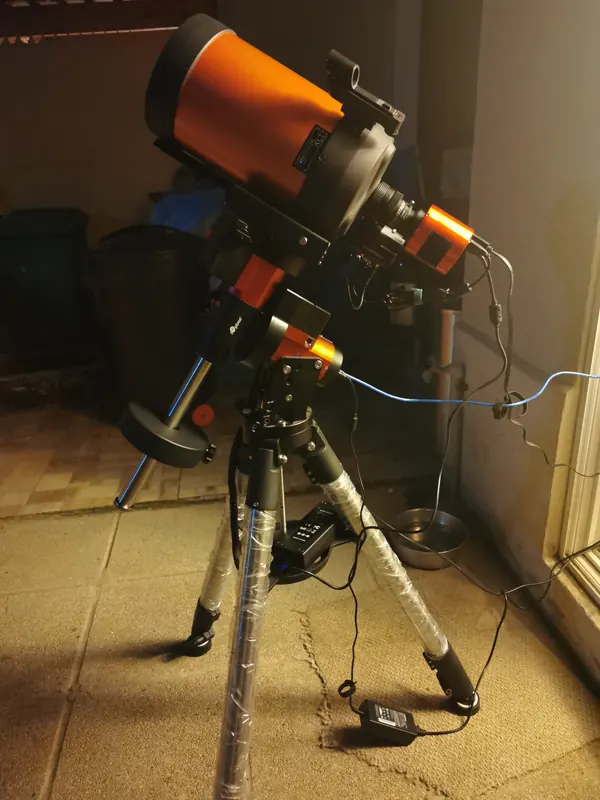
Like everyone else, the pandemic had us shut in at home. Days went by, then weeks, then months. Around that time Jorge had the idea of buying a telescope, to see what we could explore from the backyard of our house in Peñalolén. That's how the Celestron NexStar 6SE came into our lives — we fondly named it “Celestín”.
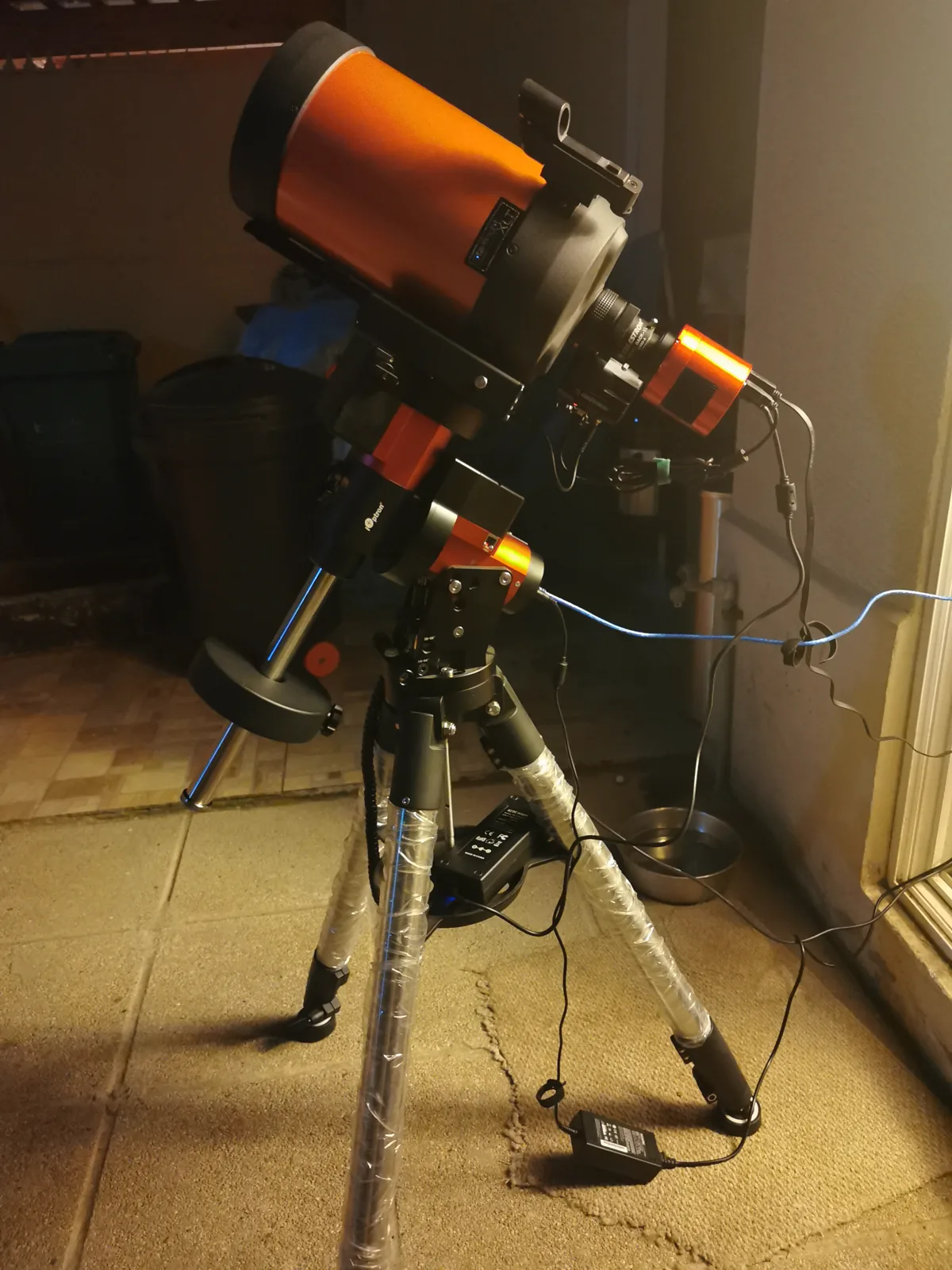
Celestín, our first telescope And so, at the end of 2020, an adventure of constant learning began. There were surprises and frustrations too (lots of them!): when something we'd planned didn't work, when the weather let us down, and all the ones that simply come with learning. We learned to use the instruments and understand how they work, but we also learned about the sky and the universe.
That's how we took our first deep-sky astrophotos, straight from the backyard, in the middle of Santiago and under enormous light pollution. We discovered nebulae, mostly, and started sharing them on our Instagram account, @astropatiochile.
-
After the pandemicChapter 4
In search of darker skies
When the pandemic ended, we started going to the Cajón del Maipo to use the telescope under a darker sky. It was fun and, above all, fascinating: pointing at a patch of sky where you see nothing with the naked eye and discovering millions of stars, nebulae and objects that, at the time, we sometimes didn't even know what they were.
The more we learned, the more happened. We were learning to use the equipment, to capture and process astrophotography, and about the universe itself. We kept adding equipment with different strengths from what we already had, and we wanted ever darker skies.
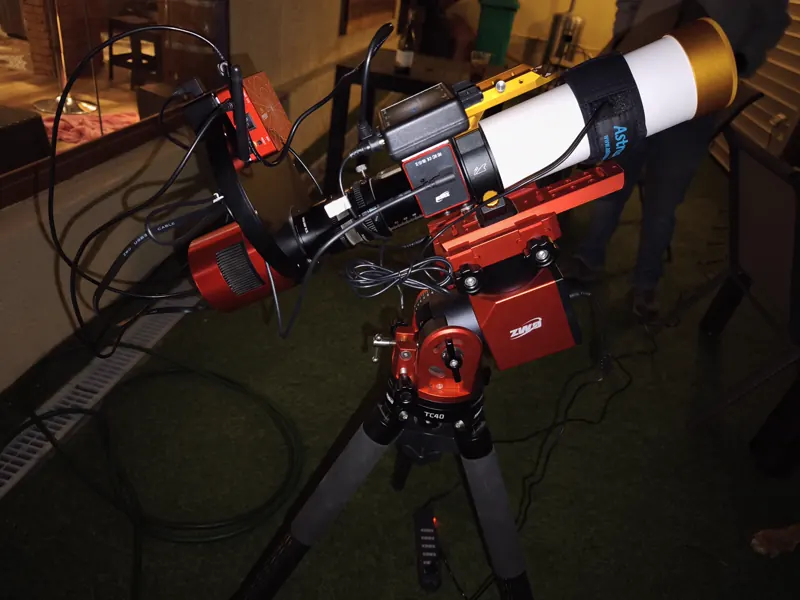
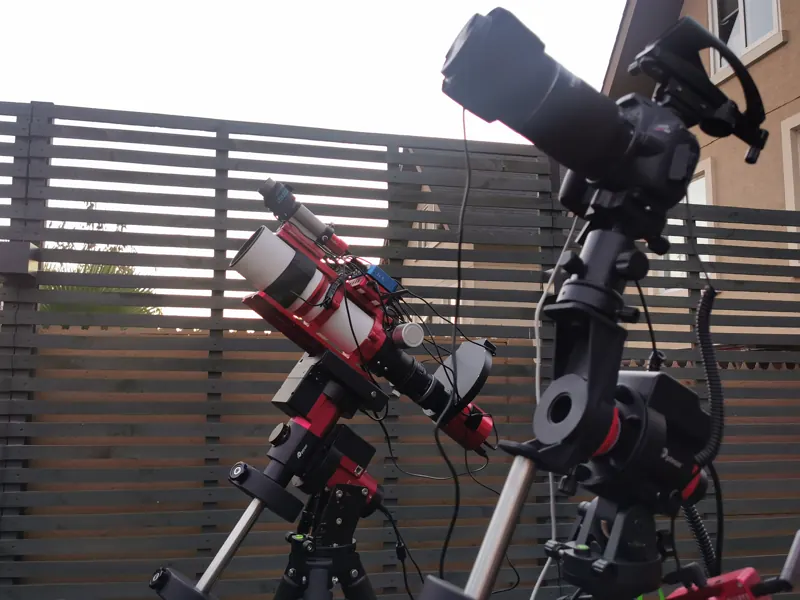
That's how the William Optics Zenith Star 61 and GT81 refractors arrived — our “Willys”.
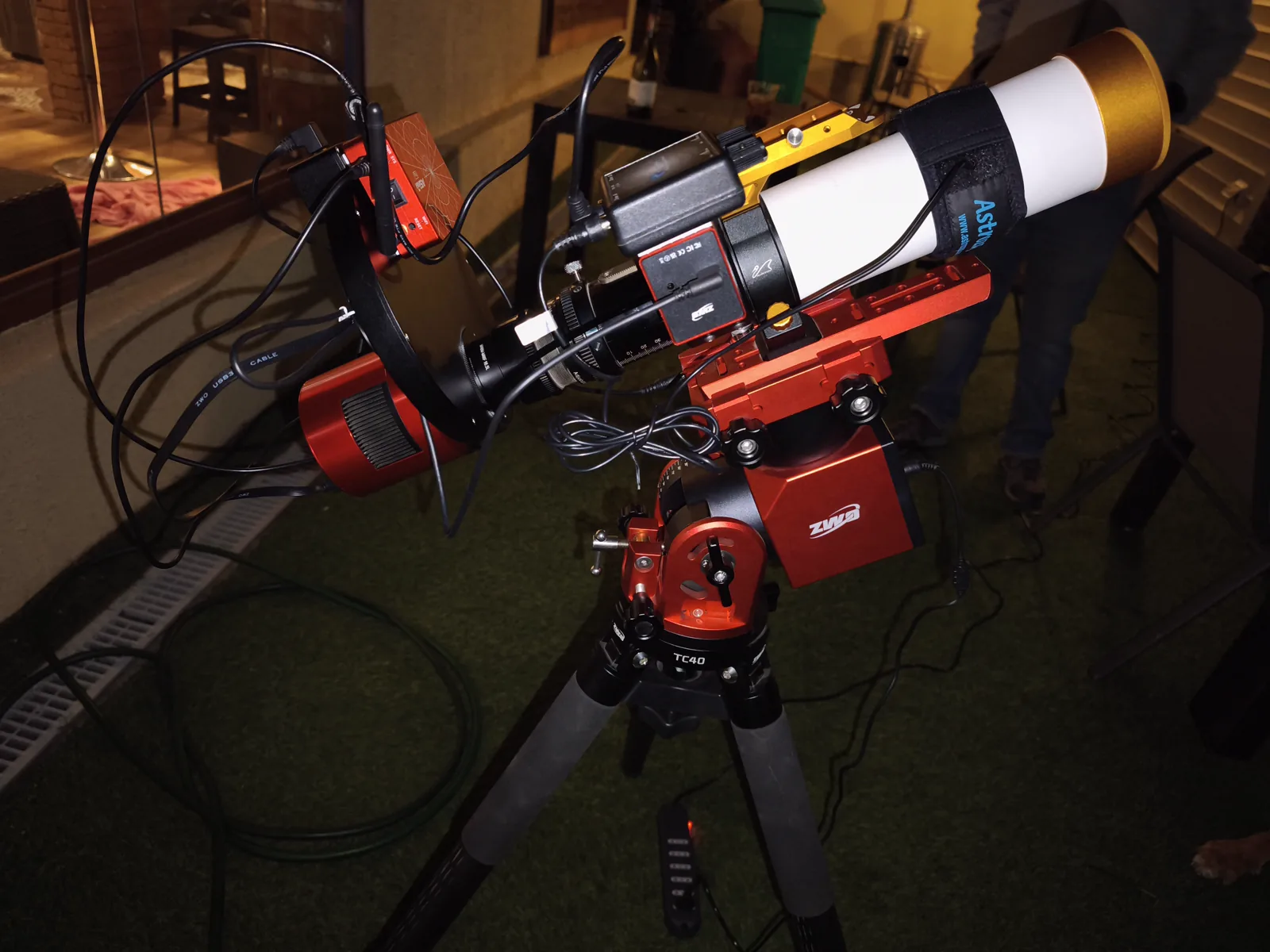
The Zenith Star 61 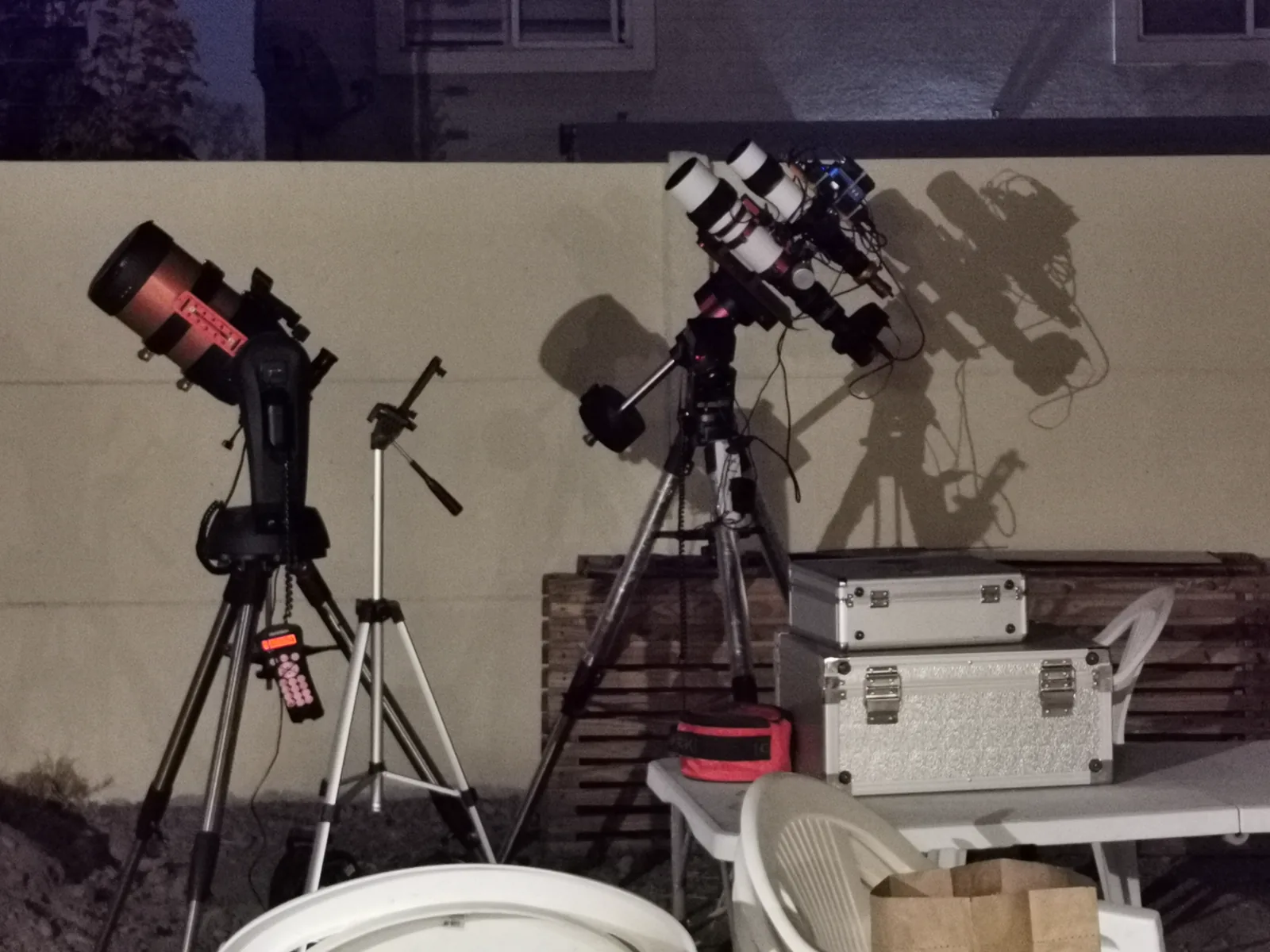
Celestín and the Willys, ready for a night out 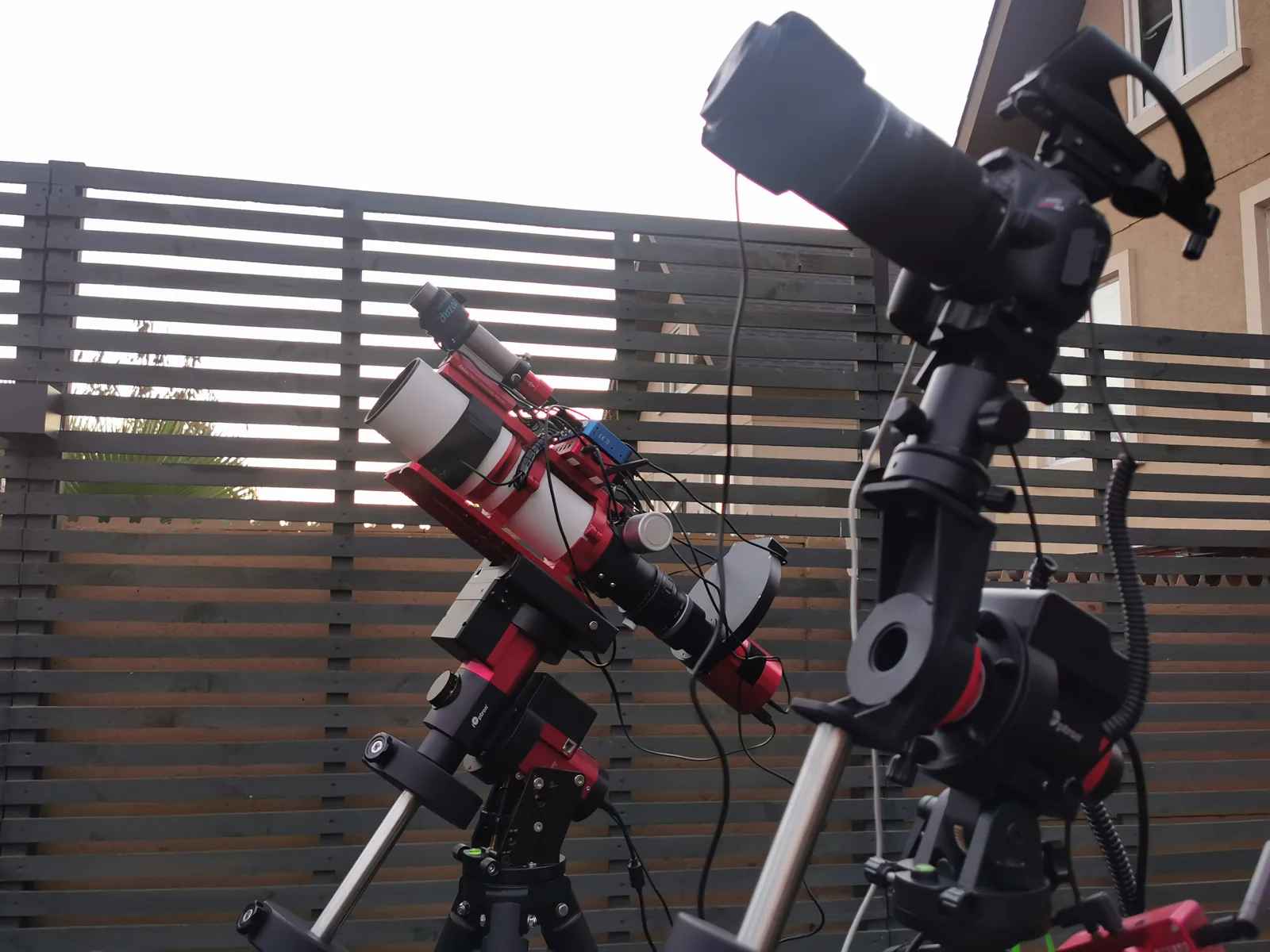
The GT81 with the Canon We started traveling to the Elqui Valley and to Río Hurtado. There we did a lot of astrophotography, with telescopes and with a very basic Canon DSLR. We did a lot of naked-eye observing and watched meteor showers. And so the Coquimbo Region became our favorite place.
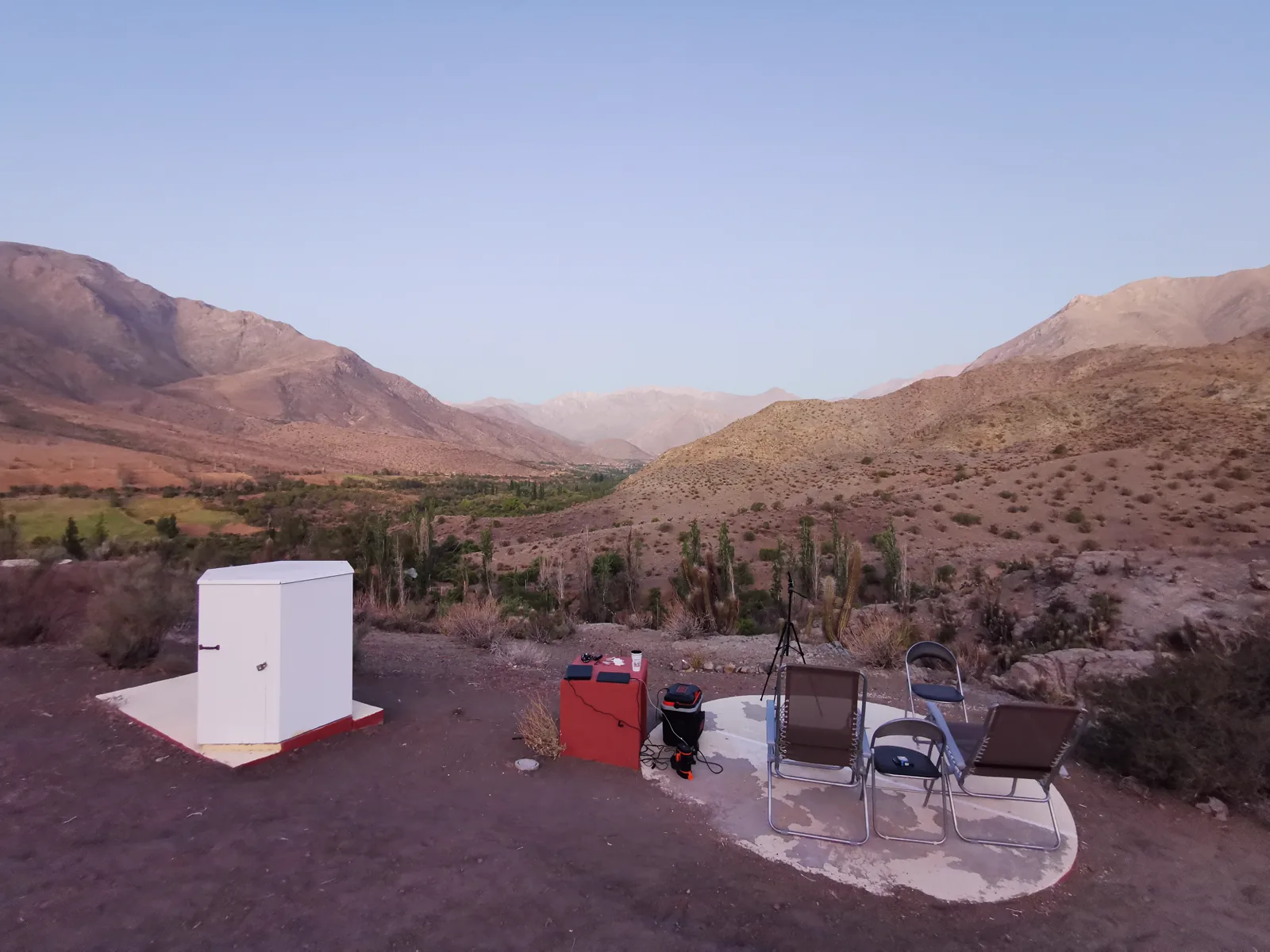
Río Hurtado 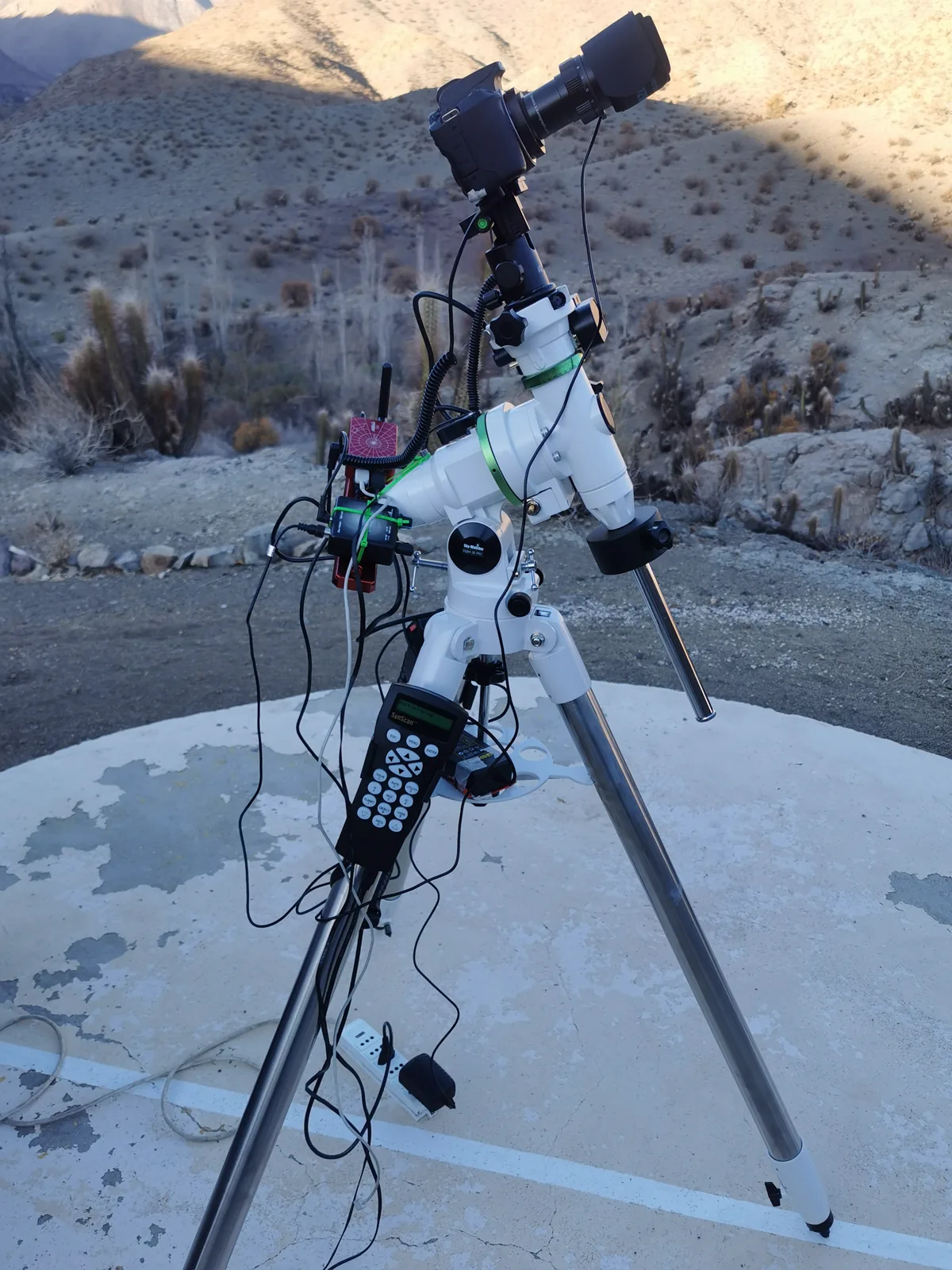
Setting up at sunset 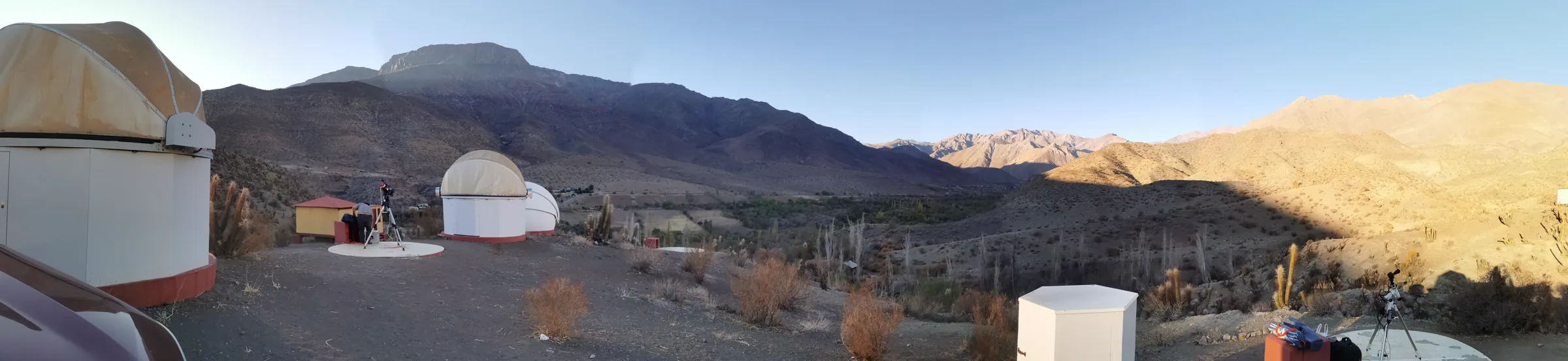
Río Hurtado -
2025Chapter 5
A house under the Elqui sky
At the end of 2024 we decided to look for a house in the Elqui Valley. We wanted to come more often, work remotely whenever we could and enjoy the night sky more nights a year. The dream came true in mid-2025.
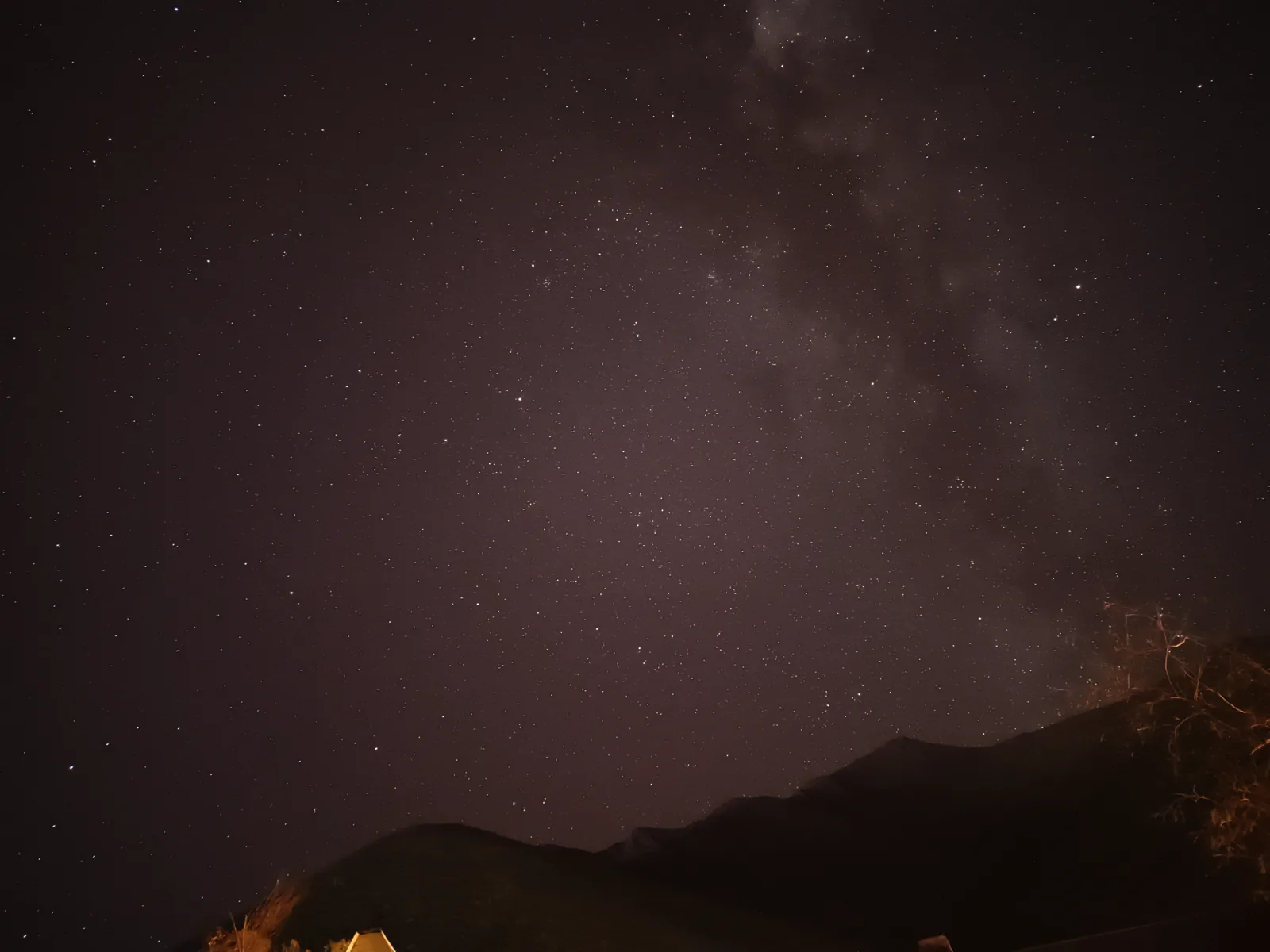
The Milky Way from Diaguitas 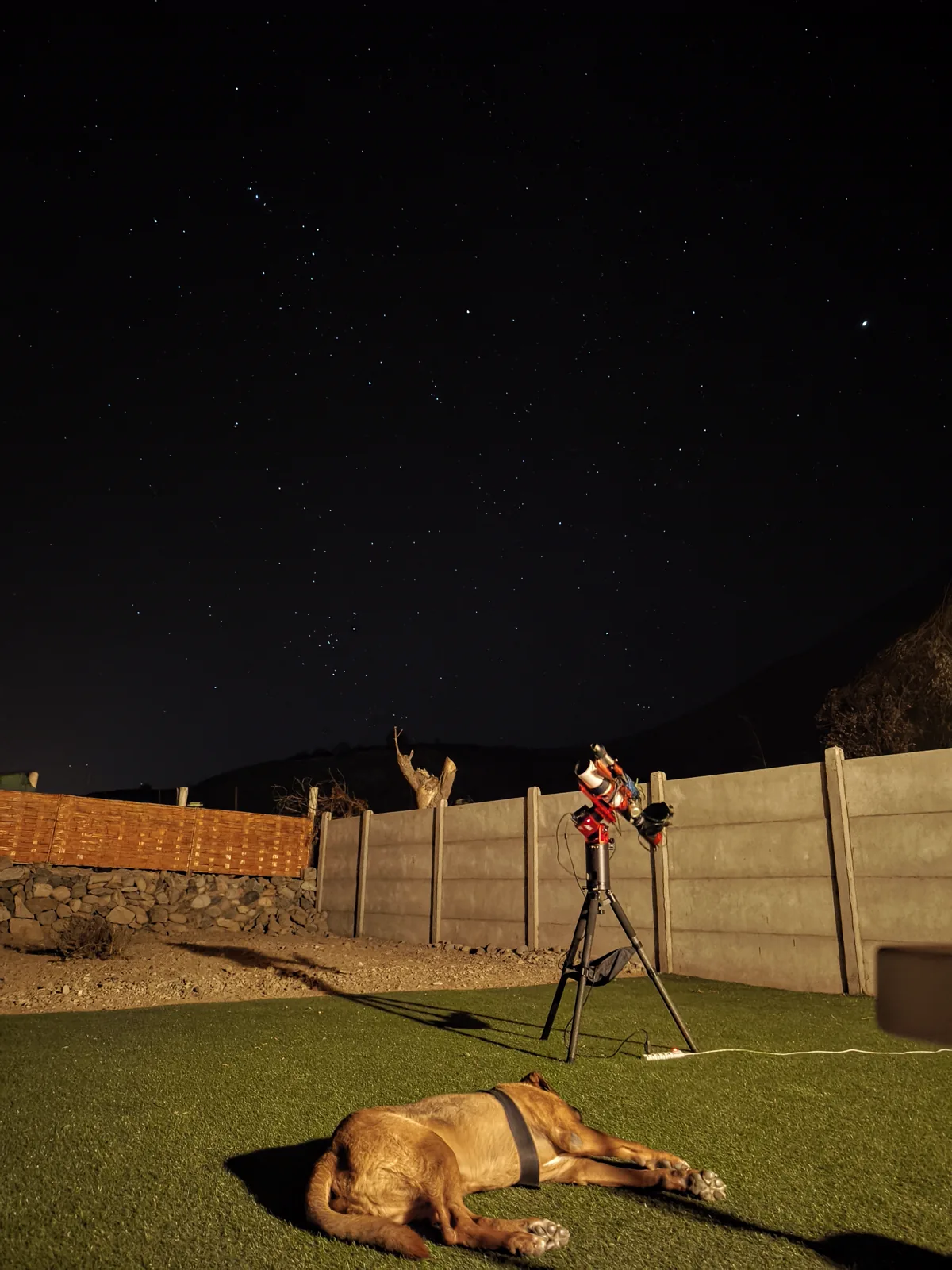
An astrophoto night, with company 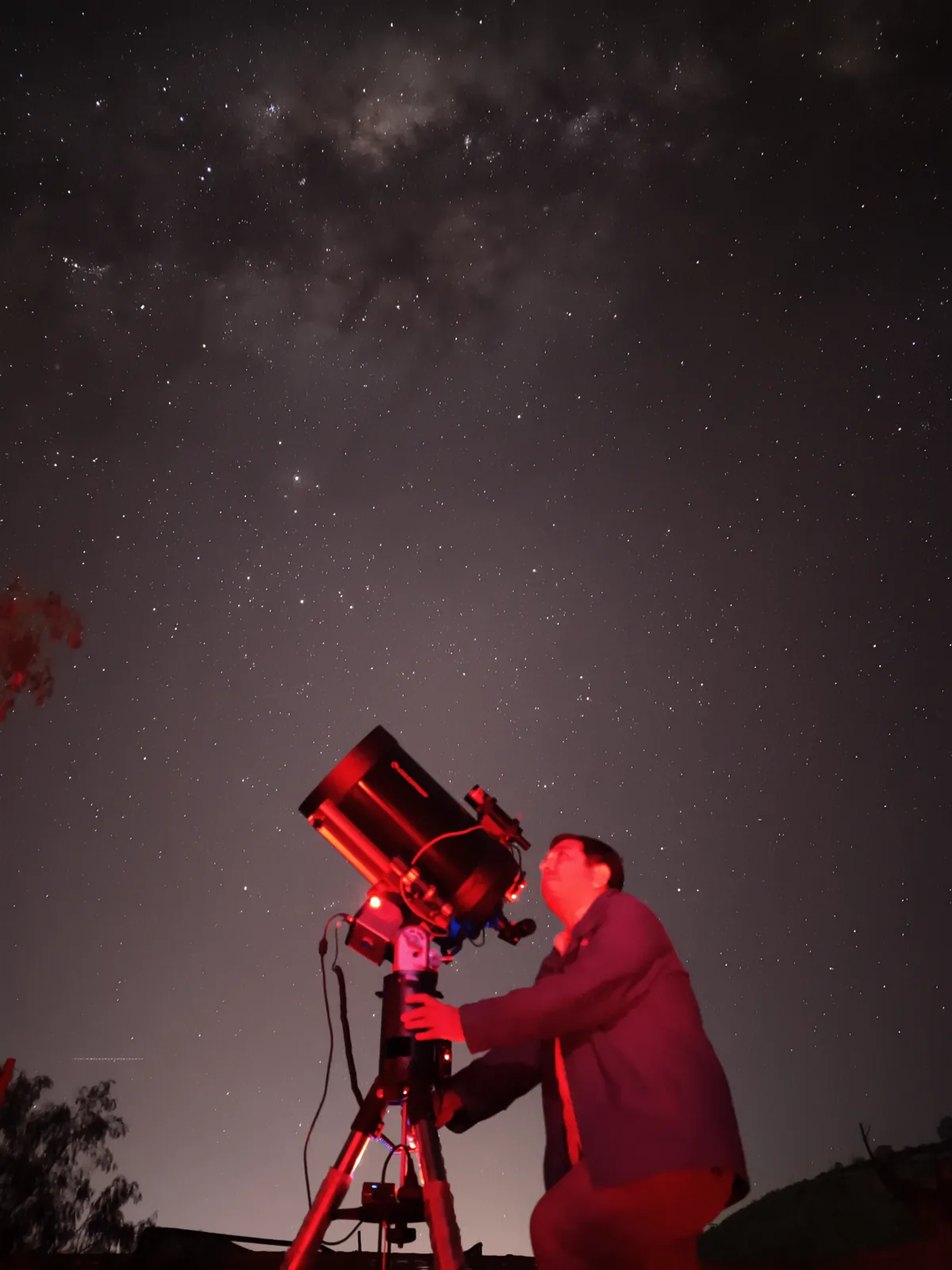
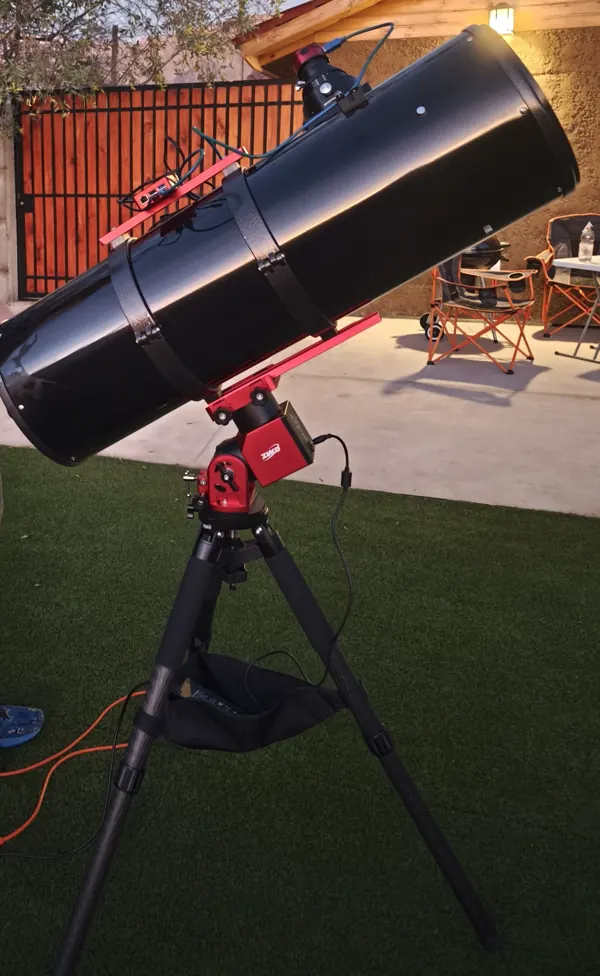
Jorge under the Milky Way Soon after, a new member arrived: an 8" f/4 Orion Newtonian telescope, ideal for photographing galaxies.
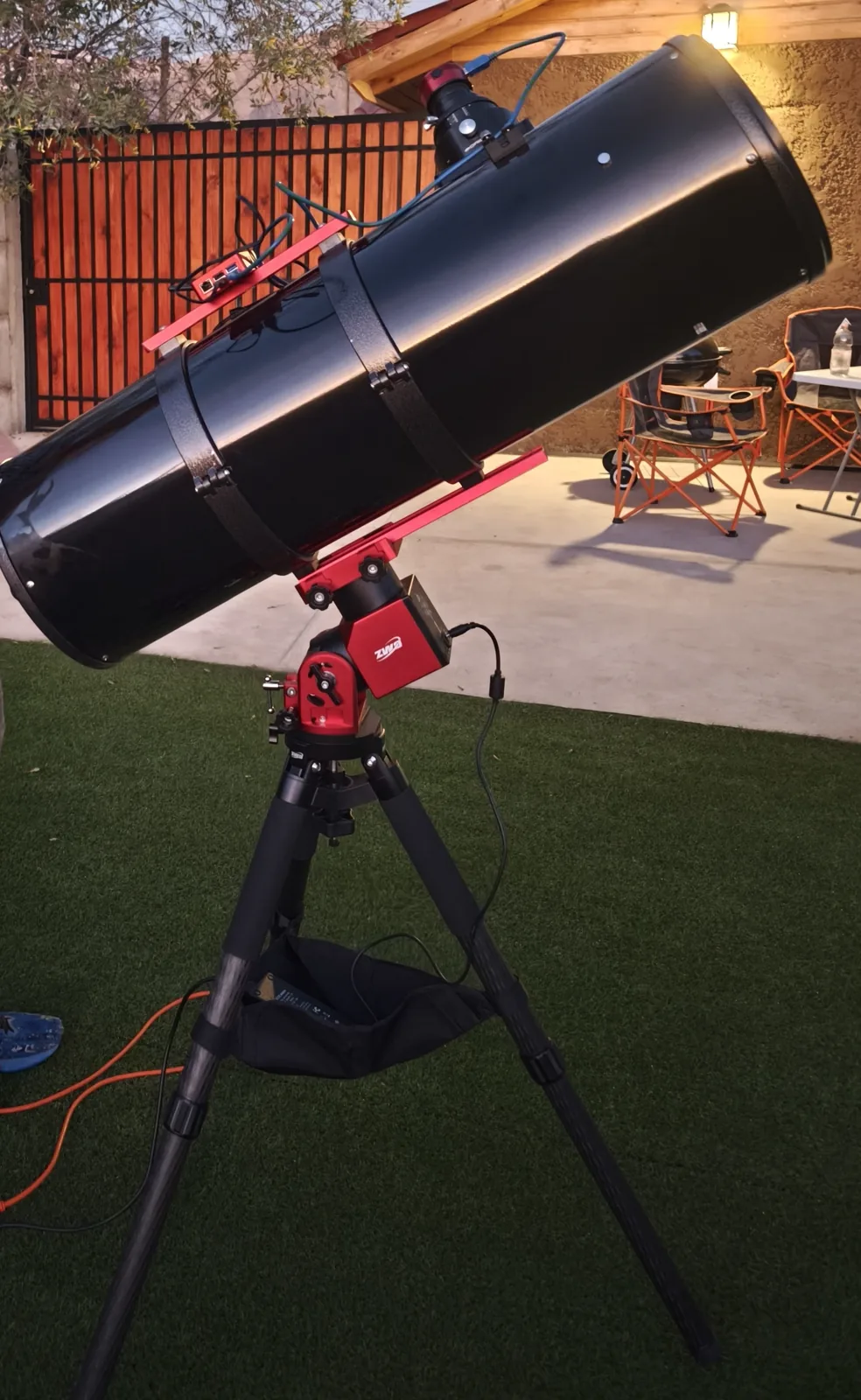
The 8" Orion -
2026Chapter 6
Learning to share
But this year, 2026, we wanted to go further. We felt the urge to share how wonderful the universe is and everything we had learned over the years. But we also wanted to make sure that what we shared was real, accurate and trustworthy information, and we knew we still had more to learn for that. So we enrolled in and completed the Diploma in Fundamentals of Astronomy at the Universidad de Chile.
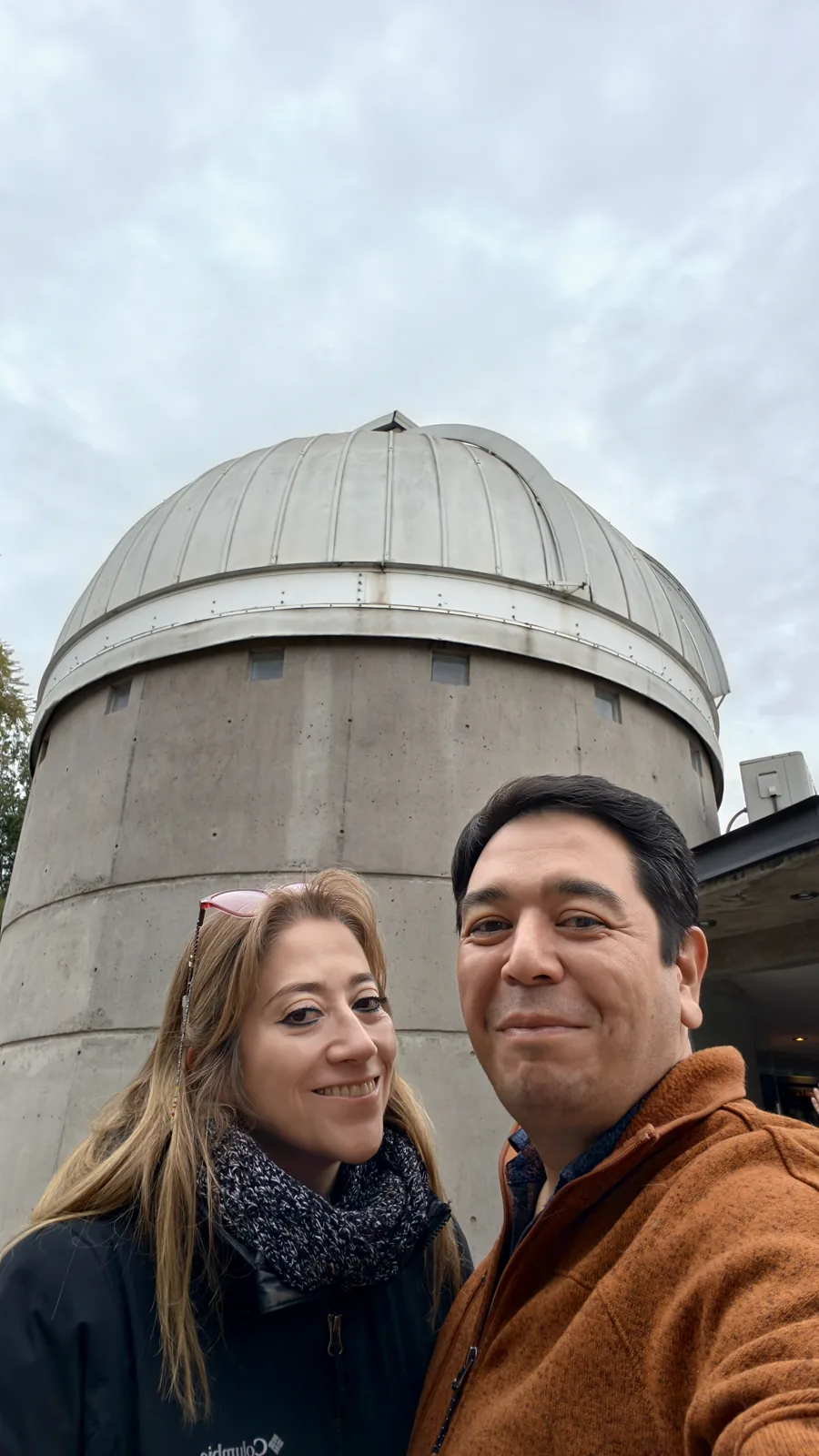
Diploma in Fundamentals of Astronomy 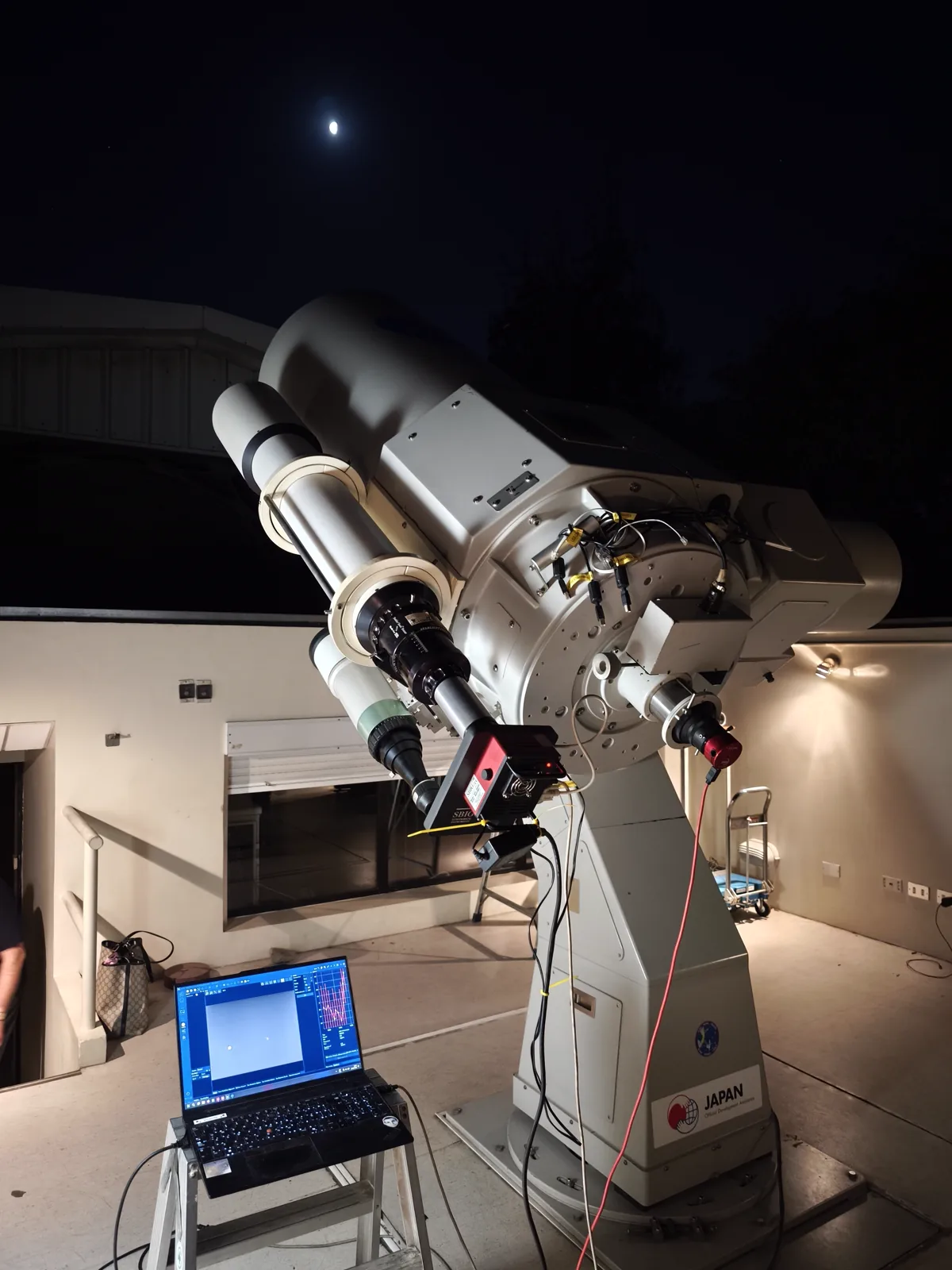
One of the observatory's telescopes, under the Moon 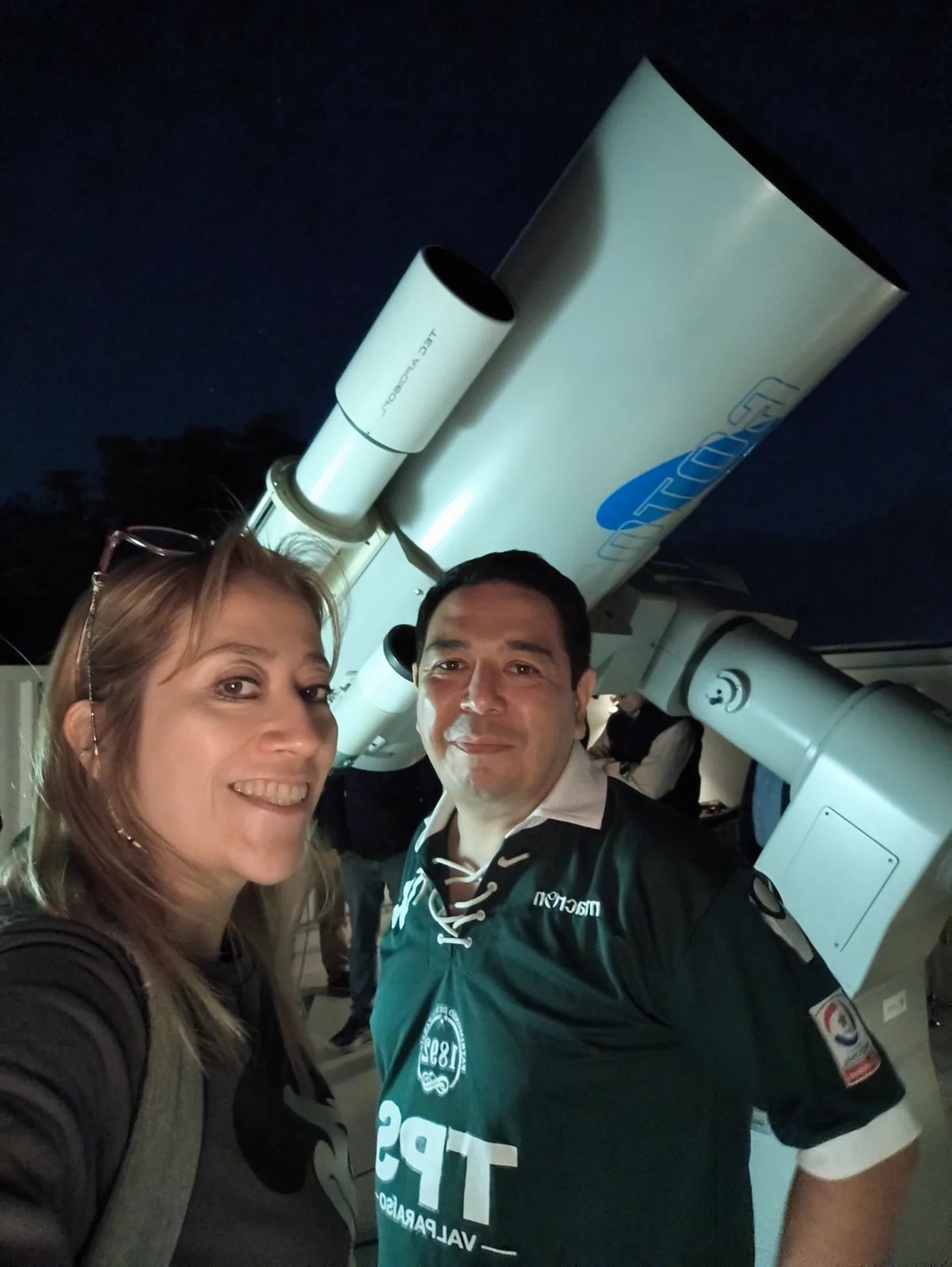
Visiting the observatory 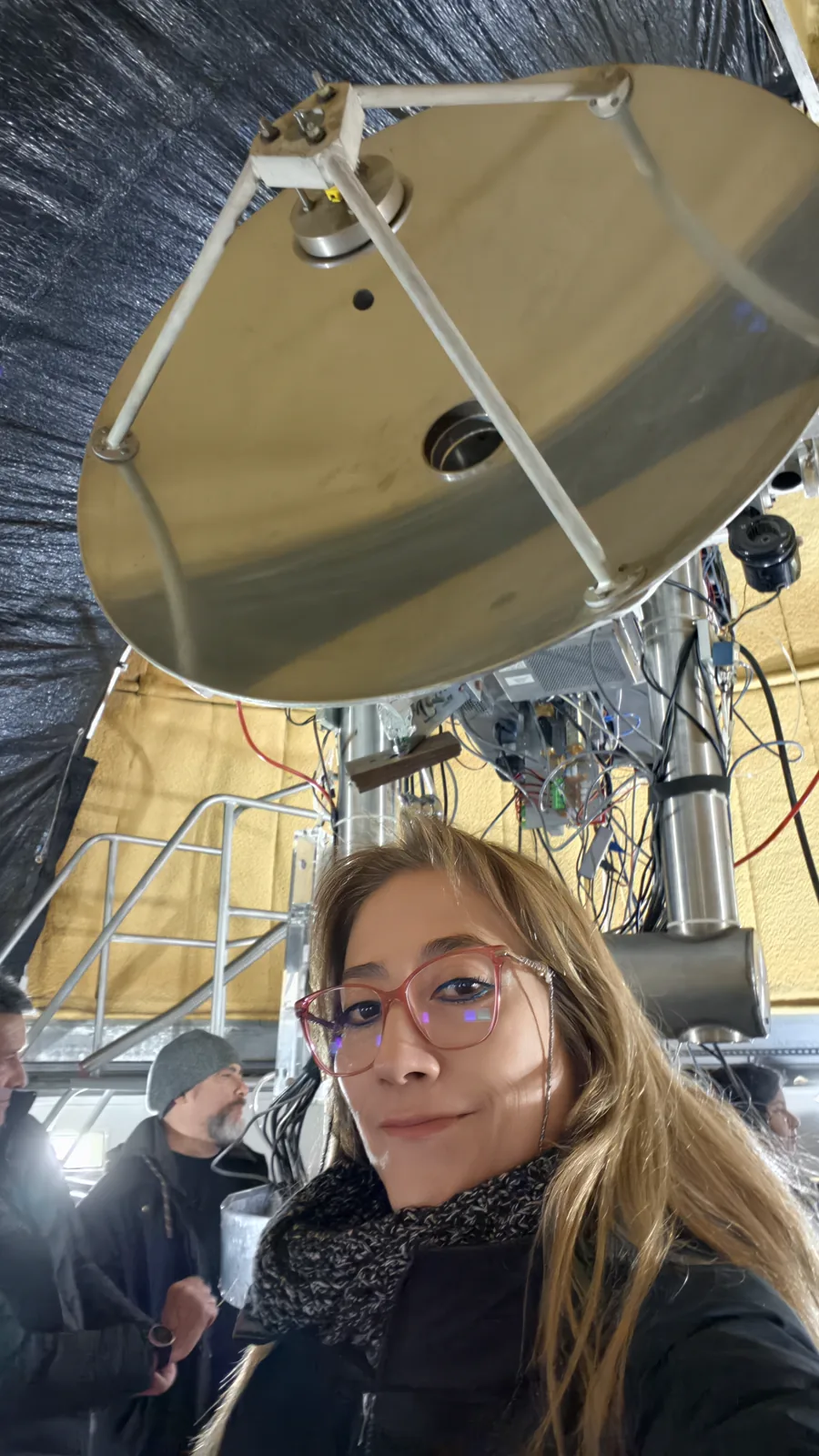
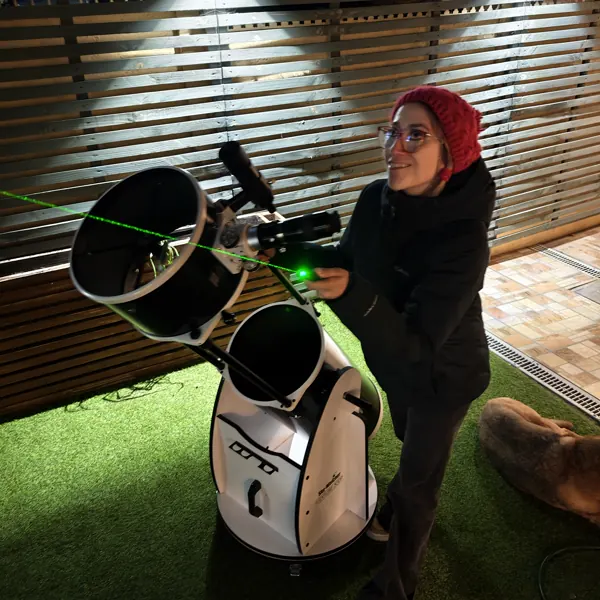
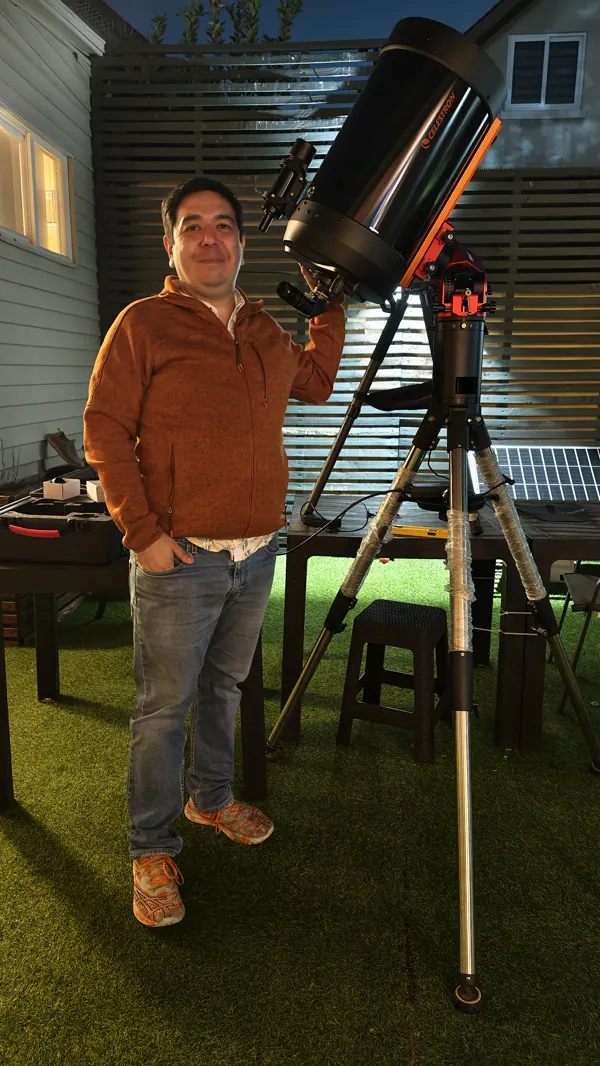
Getting to know a radio telescope And as if that weren't enough, two new members joined the family: a Sky-Watcher 300P Dobsonian and a Celestron C11.
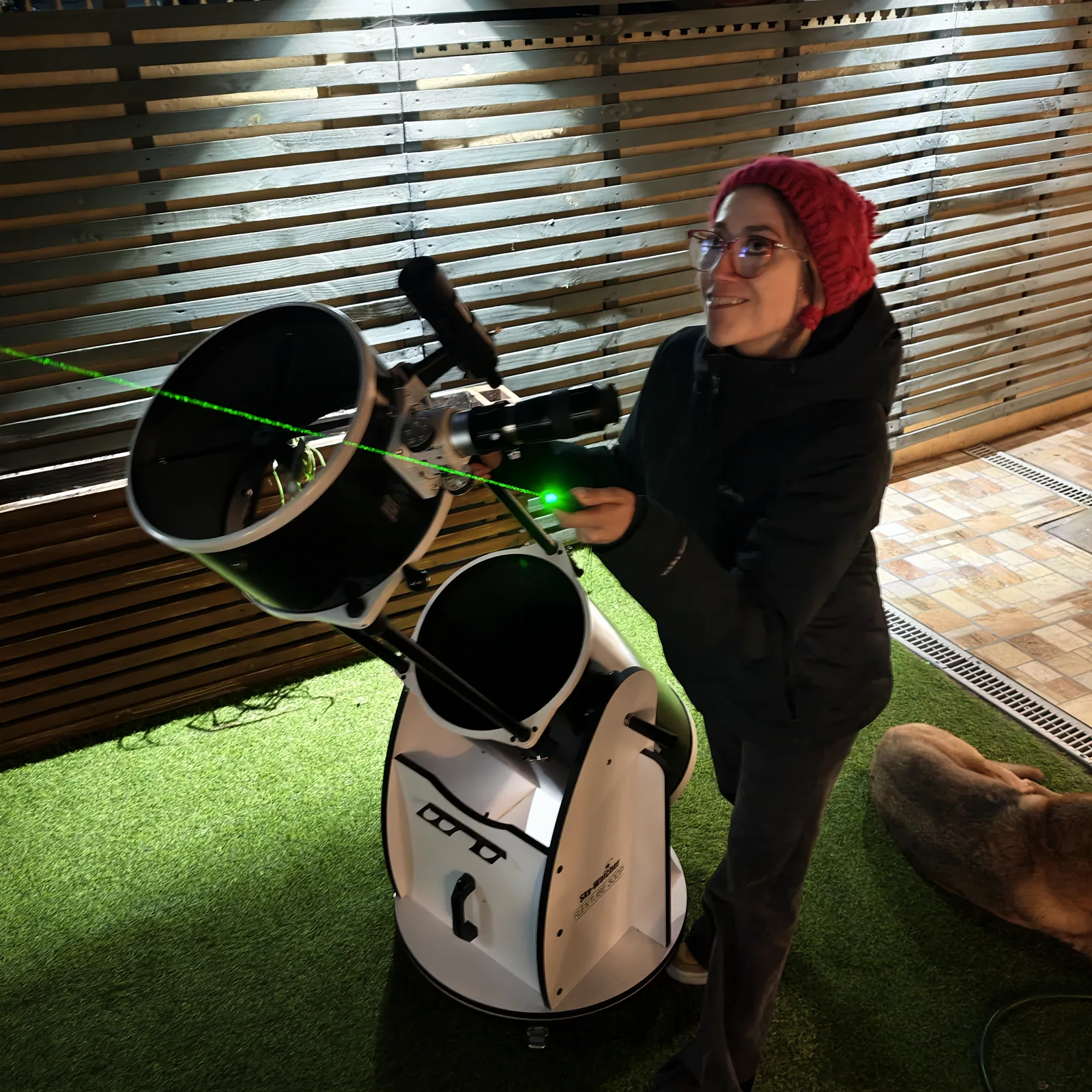
The 300P Dobsonian 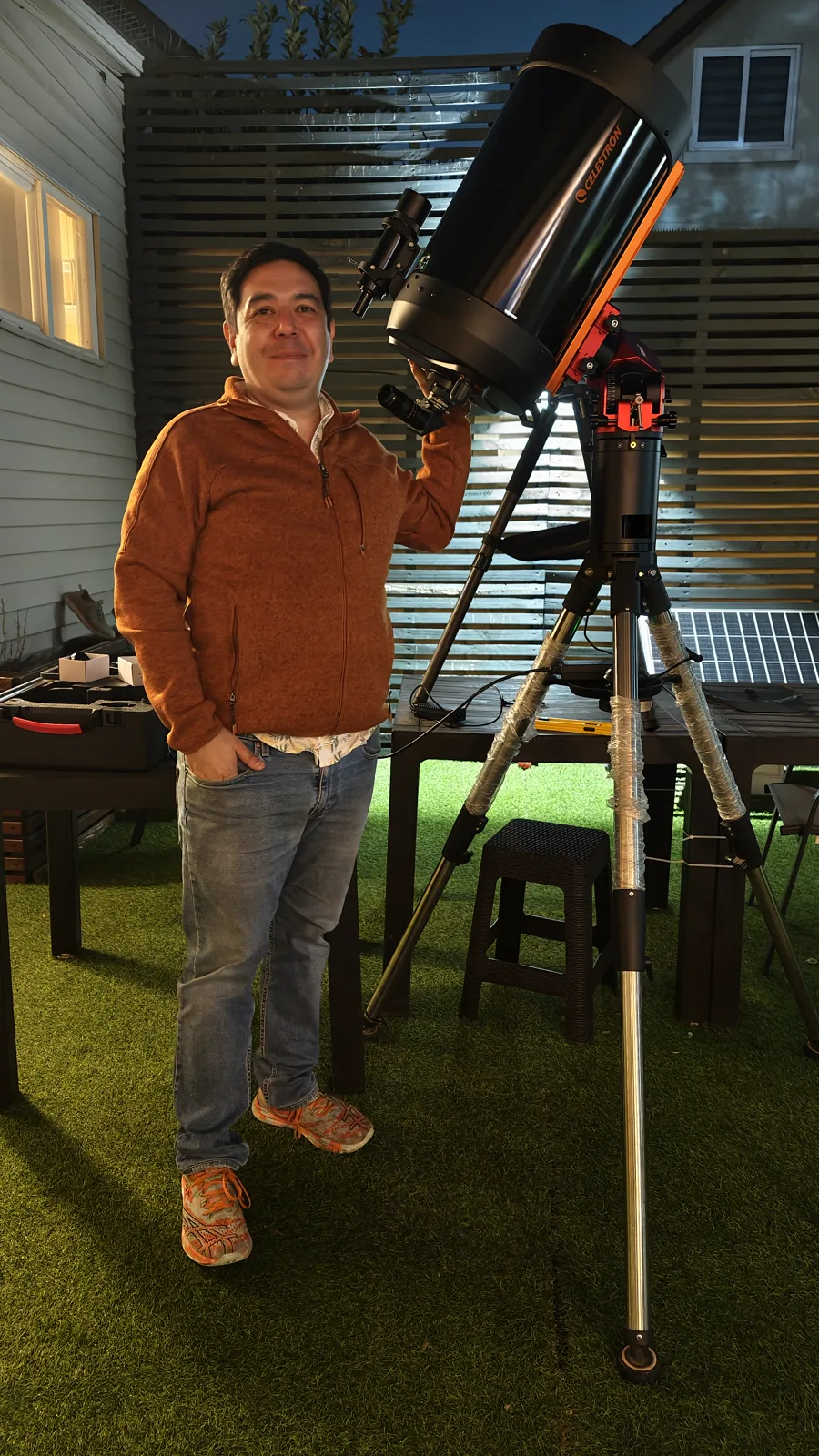
Jorge and the C11 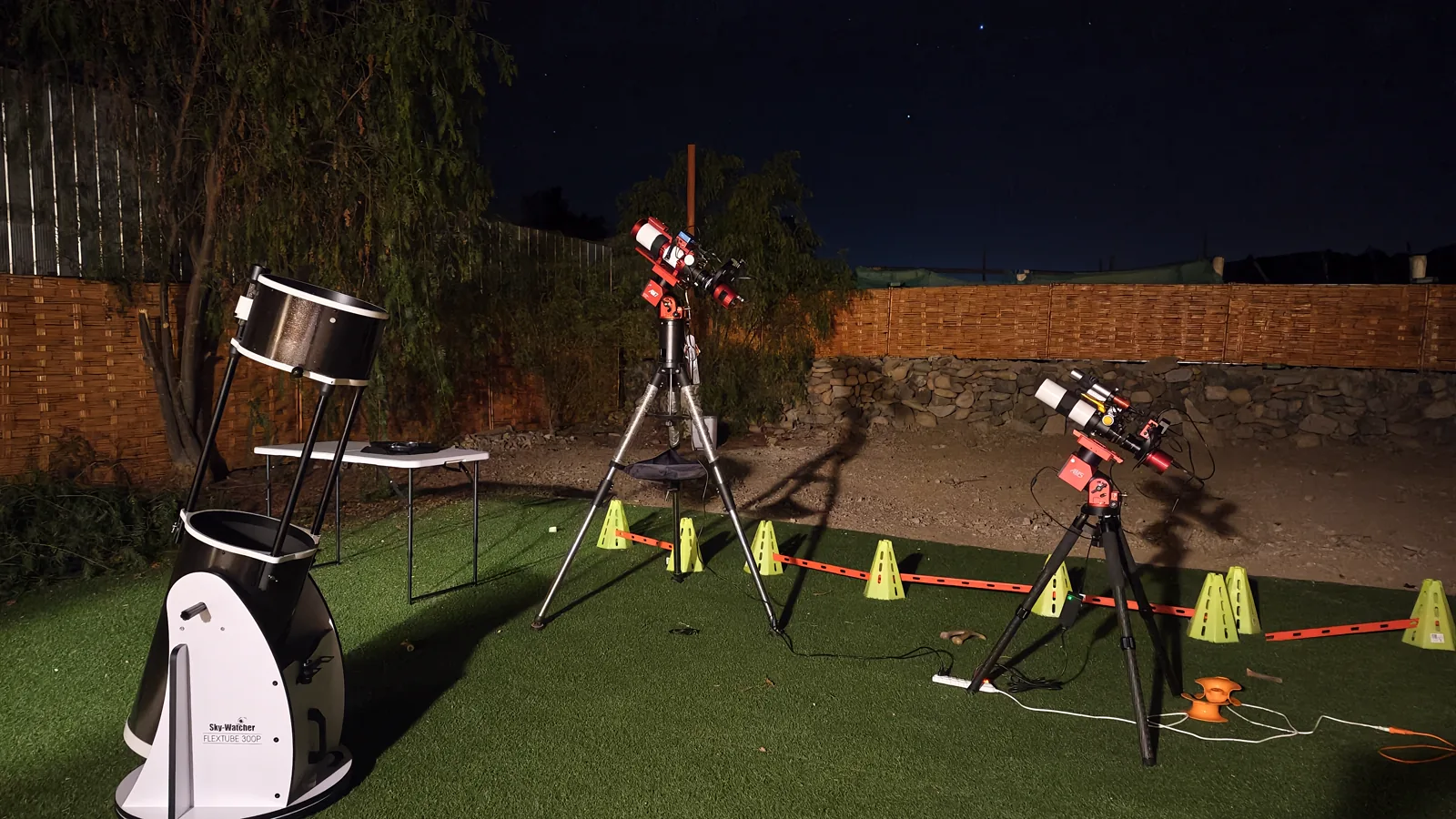
The family set up in Diaguitas
How it grew
Each one arrived for a reason: to see more, to photograph better, to reach fainter objects. Three of them are waiting for you on the night.
-
 2020
2020
Celestín
Celestron NexStar 6SEThe first one. From the backyard, in the heart of Santiago.
-
 2022
2022
Zenith Star 61
William Optics · “Willy”Wide field. We photographed the eclipse with it.
-
 2022
2022
GT81
William Optics · “Willy”Our astrophotography refractor.
On the tour -
 2025
2025
Orion
8" f/4Fast and bright: our galaxy hunter.
-
 2026
2026
Dobson
Sky-Watcher 300PLarge aperture, for looking straight through the eyepiece.
On the tour -
 2026
2026
C11
Celestron C11The detail one: the Moon and the planets.
On the tour
-
Aug 2026Chapter 7
Chasing an eclipse
We capped off August by traveling to Ponferrada, in Spain, to see the total solar eclipse of August 12.
We arrived several days early. We looked for the ideal spot and went there at the same time as the eclipse on the days before (it happened just before nightfall). That way we could picture what the experience would be like, decide where to set up and see what we still needed to pull it off.
The place
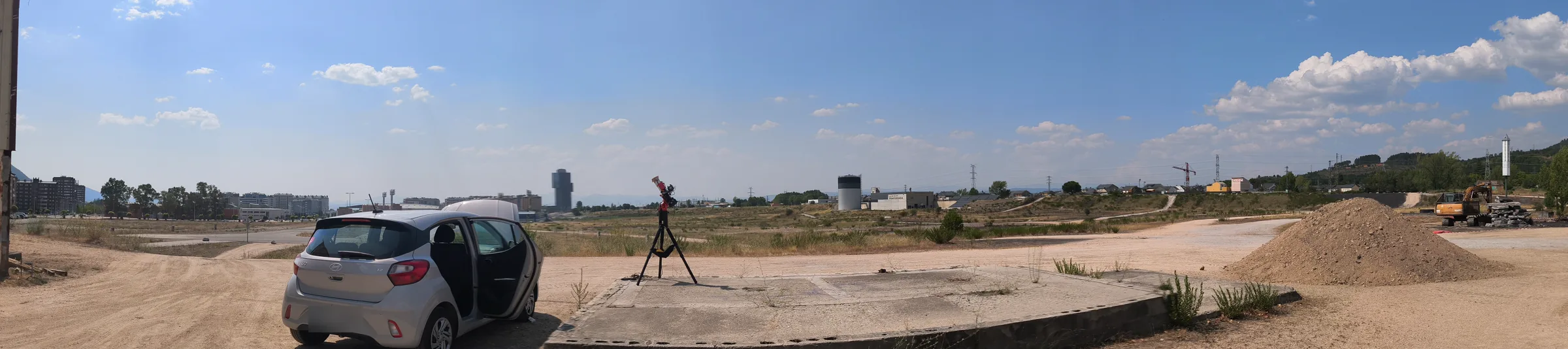
The spot we chose, days before 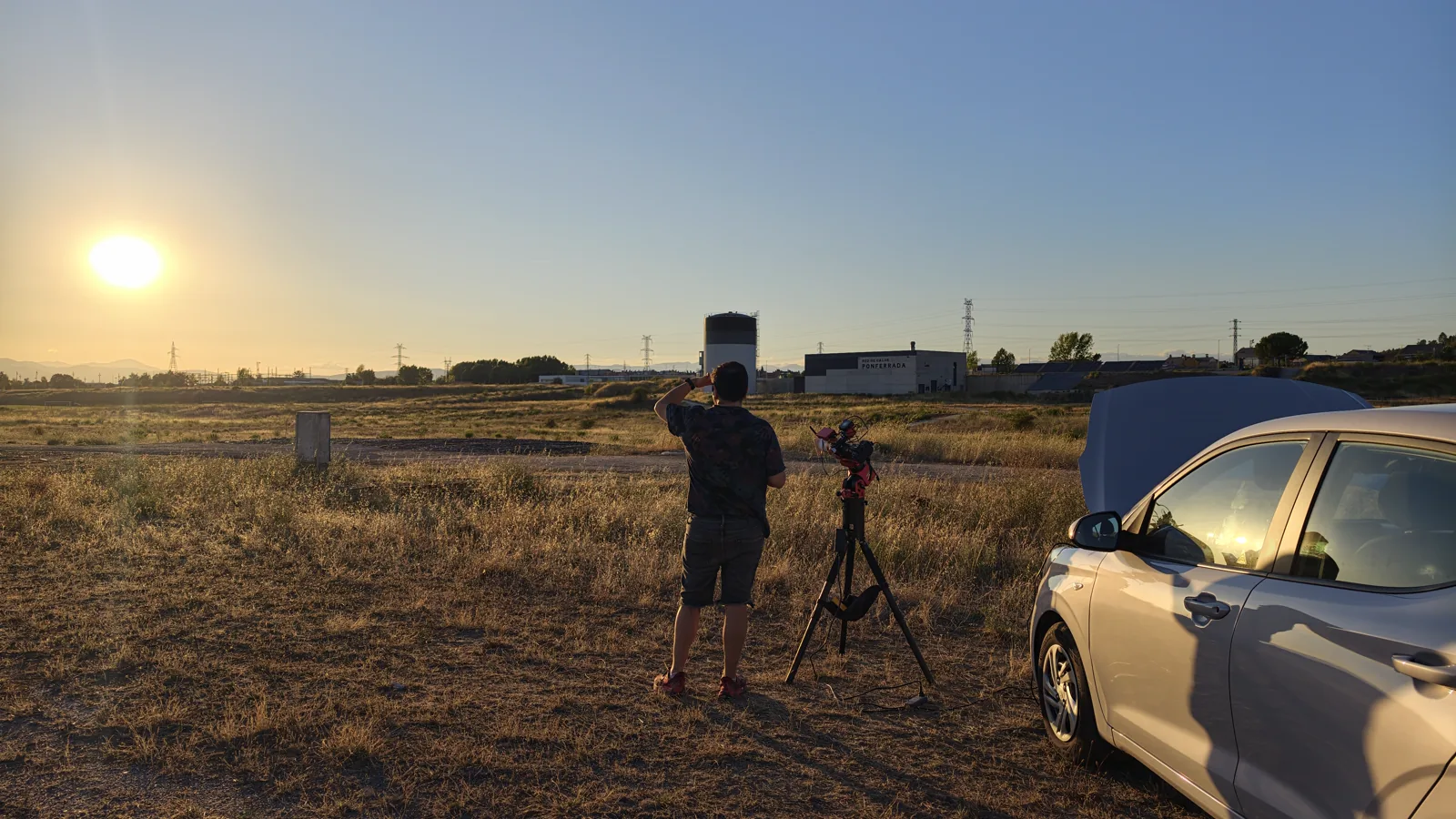
Rehearsing at eclipse time 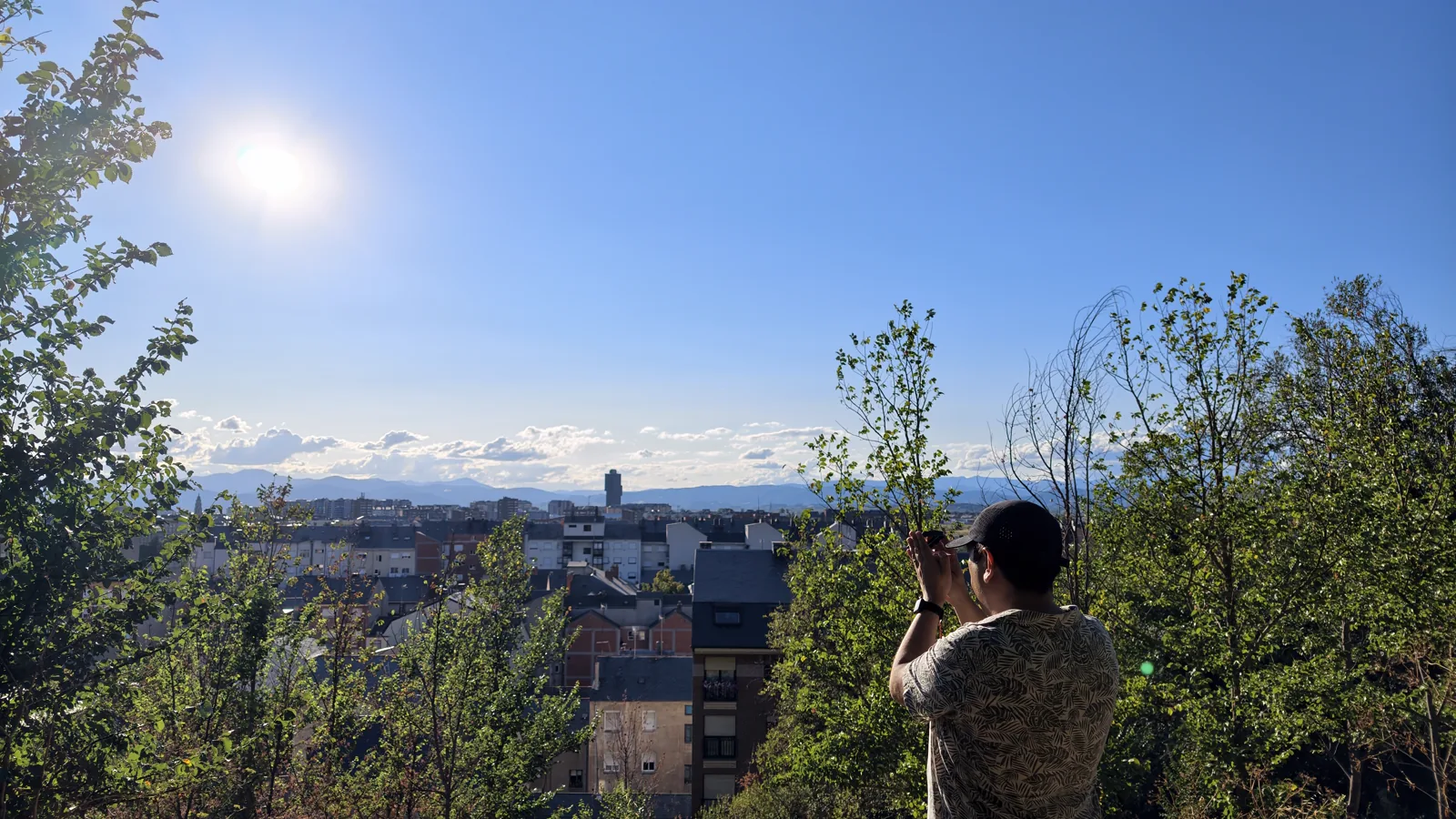
Looking for the best horizon We did it. We captured it with the William Optics Zenith Star 61 and the Canon DSLR, and also with a Vivo X300 Pro phone and its telephoto lens.
Experiencing a total eclipse was incredible, and so was going after it with equipment ready for the job. But what stayed with us was something else: sharing it with the people who started arriving. Several of them told us they set up there because they saw us with our telescopes up, hehe.
We showed them how to watch the eclipse safely, shared the live images from our cameras and told them fun facts about eclipses. In return, they told us about life in Ponferrada, its surroundings and its customs, and shared a little piece of their culture with us.
Here are photos of the place and the moment, and the videos we put together from what we captured with the telescope and the phone.
Behind the scenes
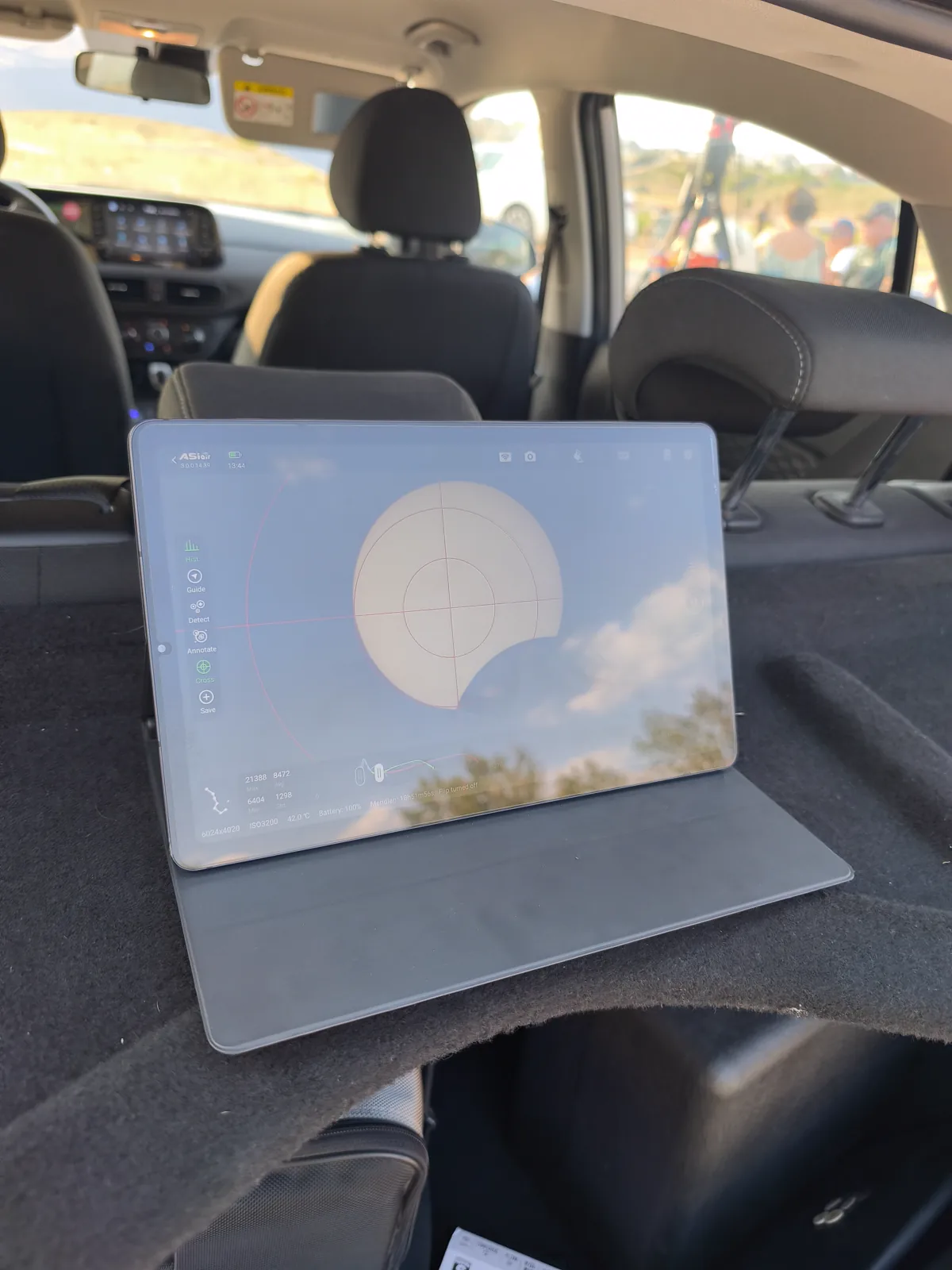
Live, from the car trunk 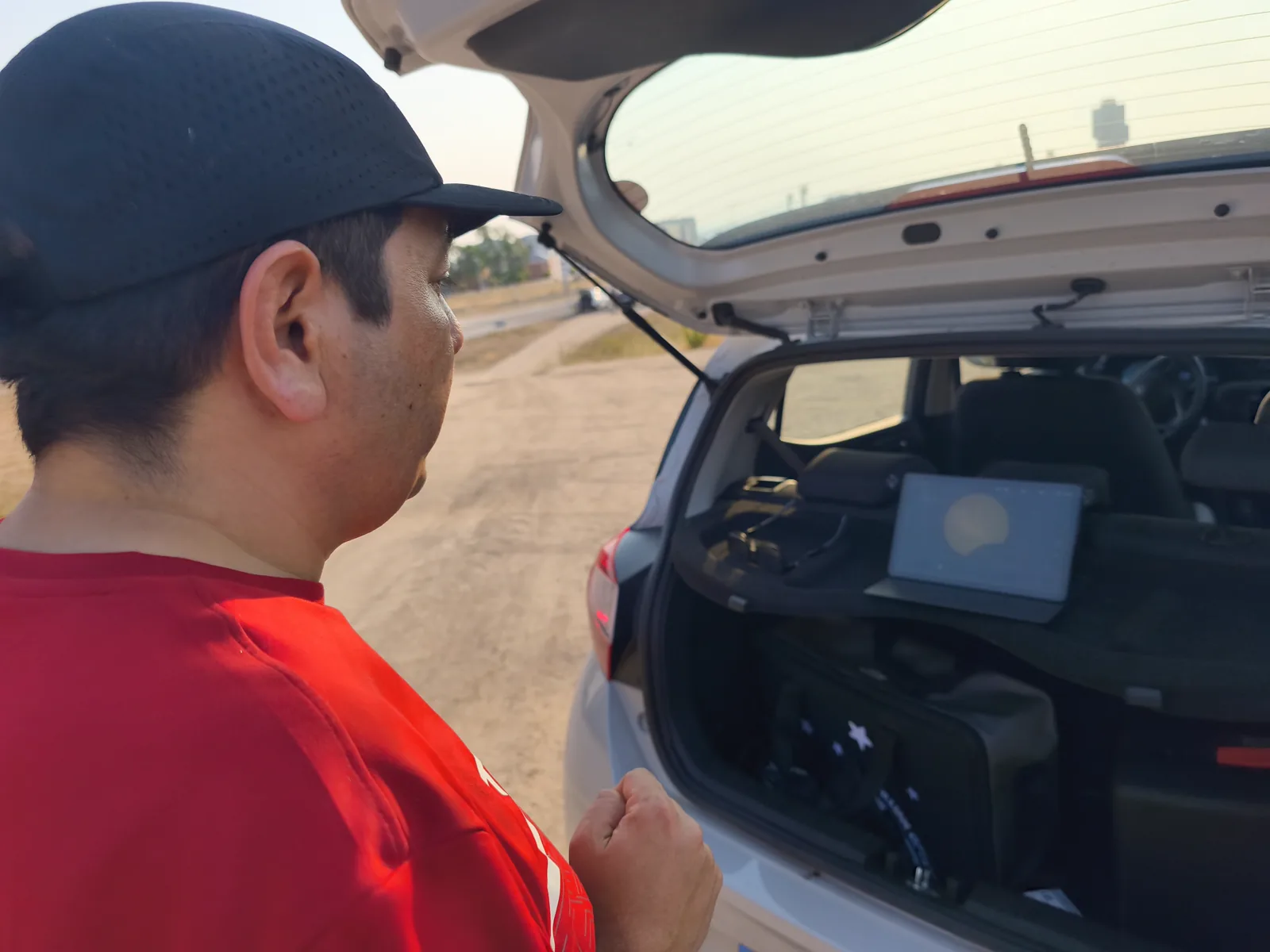
Following the eclipse on screen 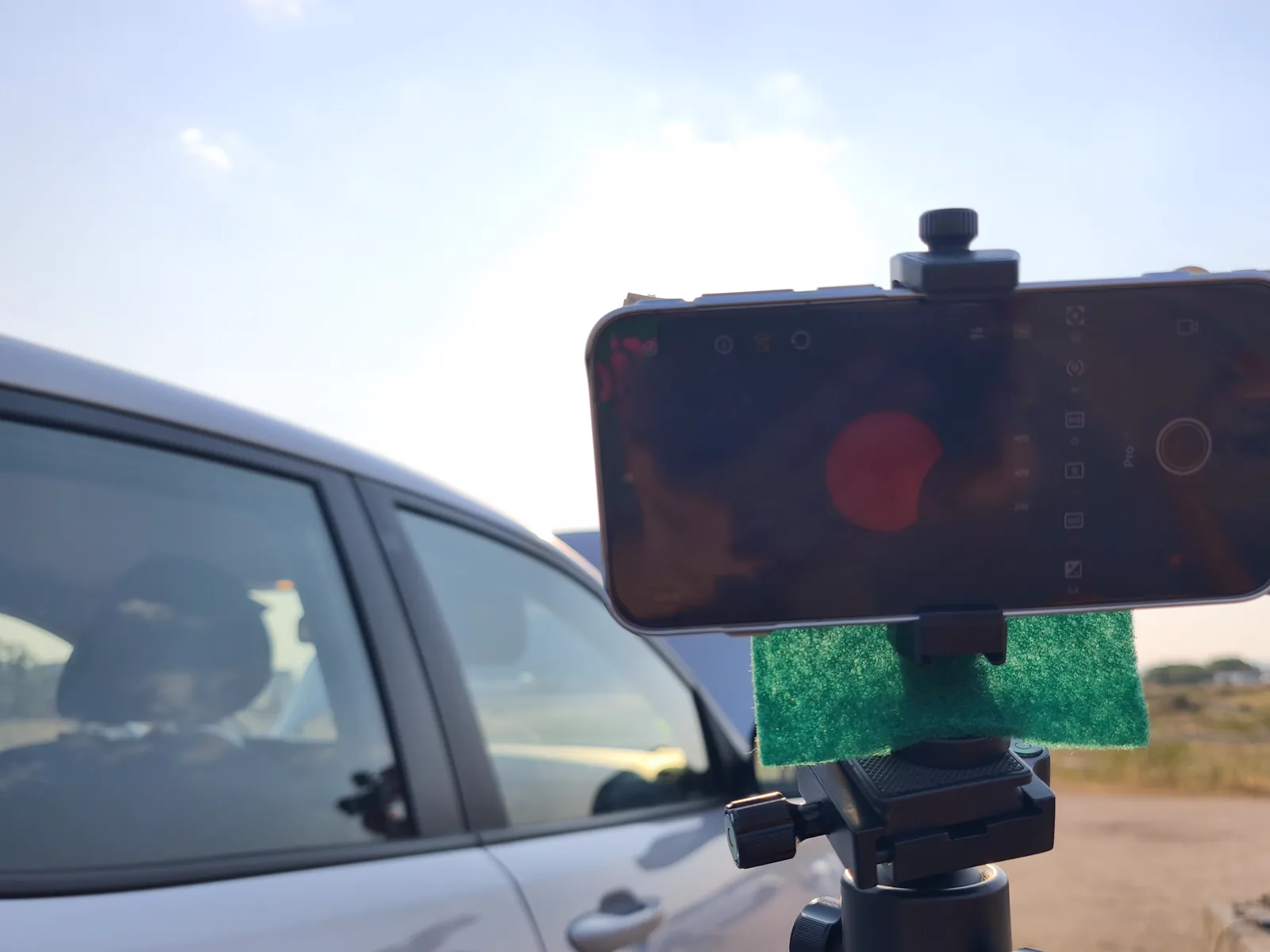
The phone, ready with its filter The eclipse
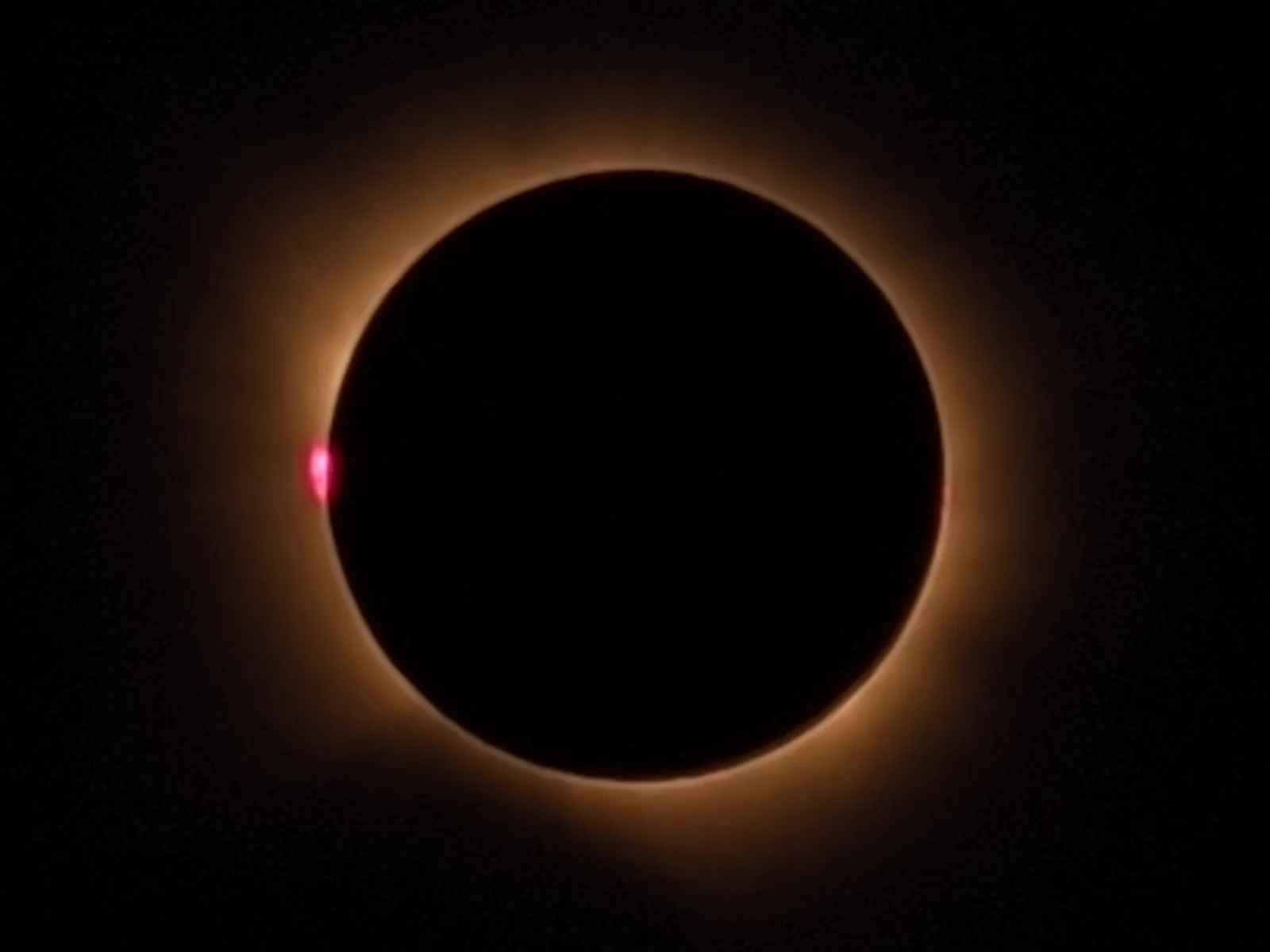
Totality, with solar prominences (in pink) 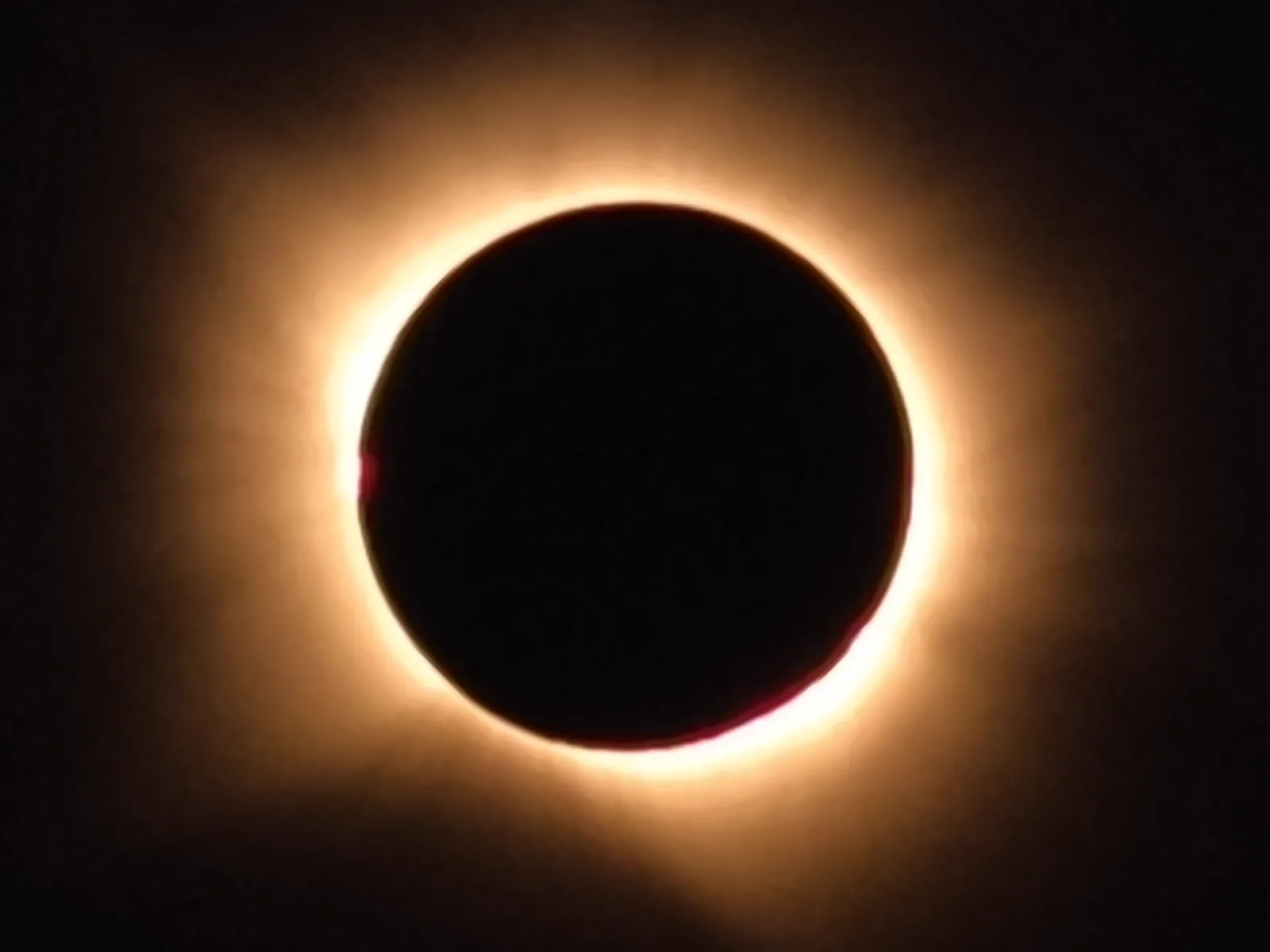
The corona 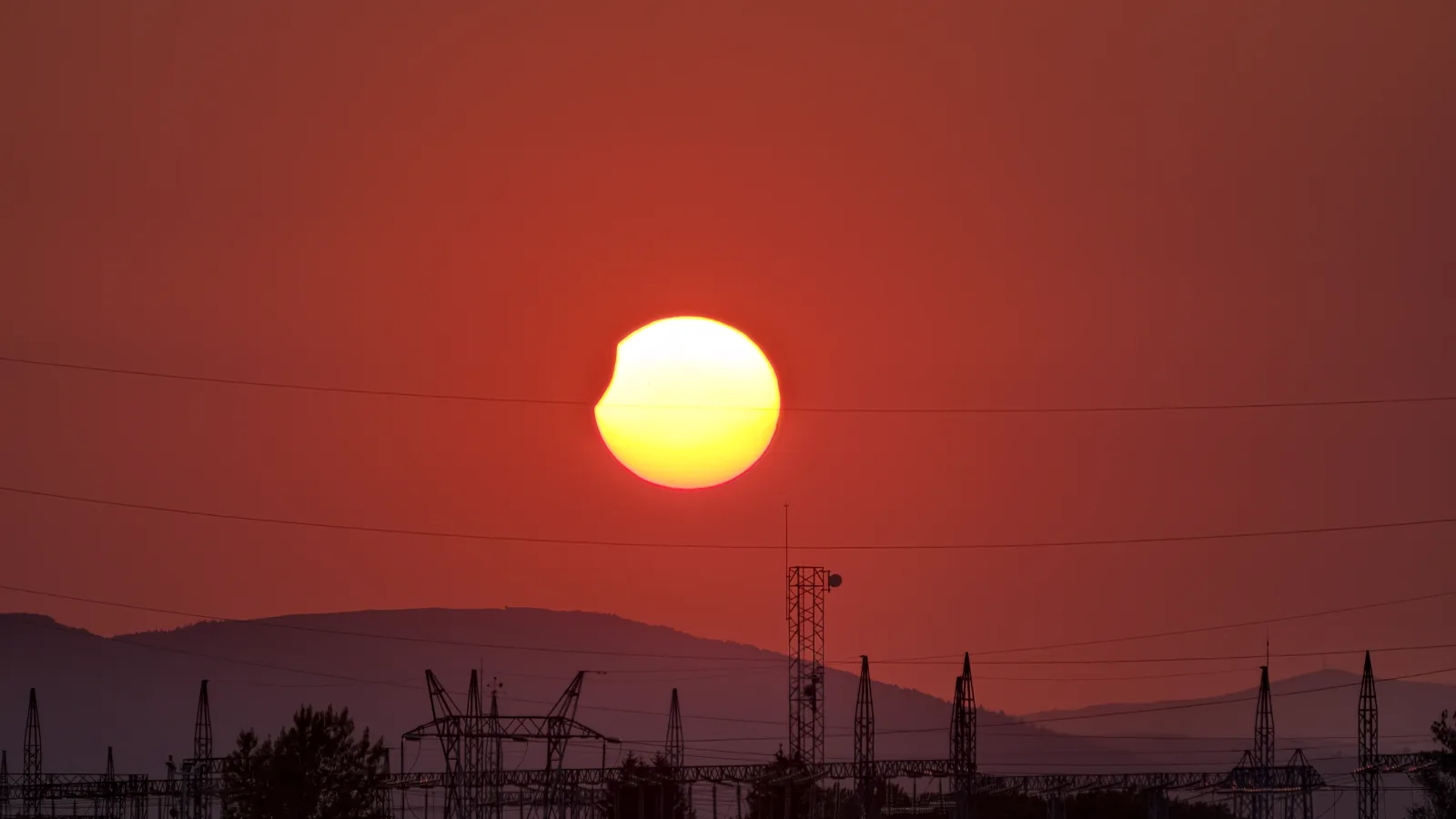
The Sun already bitten, at sunset The videos
With the telescopeZenith Star 61 + Canon · 0:14 With the phoneVivo X300 Pro · 2:02
Let's do it!
With all that behind us, we said to each other: let's do it! And we started building this experience that we now want to share with you. We want you to take home a little of what we've learned, so you can marvel at the sky on your own afterwards and — why not? — teach more people too.